
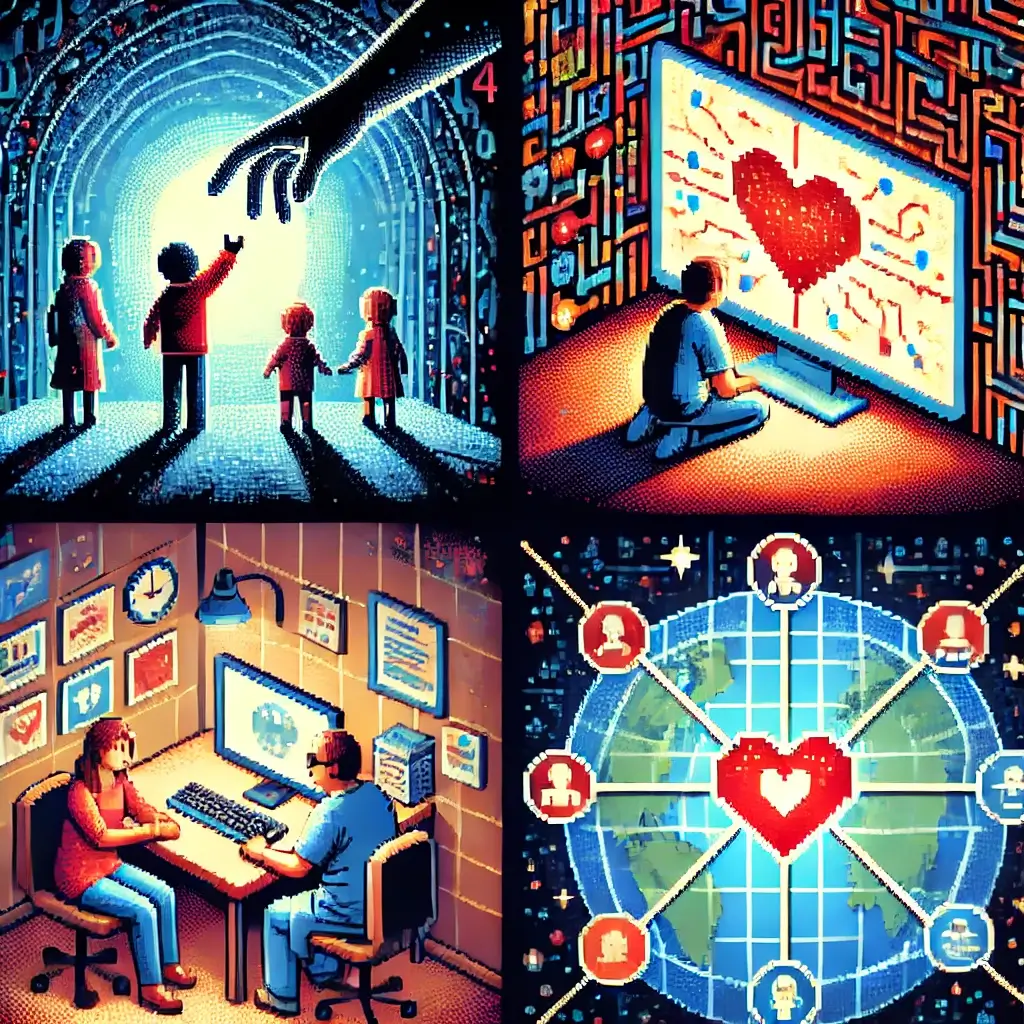
10 Million Reasons to Connect: Thriving with Rare Genetic Disorders
Life throws us curveballs, doesn’t it?
Sometimes they’re little pop-flys you can easily catch, like when you accidentally buy decaf coffee.
Other times, they’re more like a major league fastball hurtling straight at you, and that’s often what a rare genetic disorder diagnosis can feel like.
If you’re reading this, you probably know that feeling all too well.
The shock, the fear, the isolation—it can be an overwhelming storm.
And if you’ve been navigating this journey for a while, you also know that it’s a marathon, not a sprint.
The thing is, you’re not running this marathon alone.
There are millions of us out there—over 10 million people in the U.S. alone are living with one of the 7,000+ rare diseases.
Our stories are unique, but our struggles, and our victories, are deeply connected.
That’s why I’m here.
I’ve been on this road, both as a professional in the field and as someone who has witnessed its challenges firsthand.
And I can tell you from the bottom of my heart, finding your community is not just helpful—it’s essential.
It’s the lifeline that can transform a life of coping into a life of thriving.
This post is your guide to that lifeline.
It’s a roadmap to finding the support, resources, and hope you need to not just survive, but to truly live.
We’re going to talk about the messy, beautiful reality of this journey, and I promise you, by the end, you’ll feel a little less alone.
You’ll see that a diagnosis isn’t a period at the end of a sentence; it’s a comma that opens up a whole new chapter.
Let’s dive in.
Table of Contents
Finding Your Tribe: The Invaluable Power of a Rare Genetic Disorders Community
I’ll never forget the first time I met another family with a child who had the same ultra-rare genetic disorder as my cousin.
It was at a small conference, and the two of them just looked at each other and it was like they saw their own reflection in a funhouse mirror.
The parents shared a knowing look that said, “You get it.”
In that single moment, the years of feeling like they were on a deserted island melted away.
That’s the magic of community.
When you’re dealing with something so unique, so specific, it’s easy to feel like you’re the only one.
Doctors might not have all the answers.
Friends and family, as loving as they are, might not truly grasp the day-to-day realities.
The constant worry, the endless appointments, the financial strain—it can feel like a secret language that only you speak.
A community of people facing the same challenges is your Rosetta Stone.
It’s where you can share your fears without having to explain everything.
It’s a place to celebrate the smallest victories, like a child taking their first steps, or a new treatment showing a glimmer of promise, and have those wins genuinely understood and celebrated with you.
Think of it like a support group mixed with a mastermind session.
It’s not just for emotional support, though that’s a huge part of it.
It’s for practical advice, too.
Someone might know about a therapist who specializes in a certain condition, or a grant program you never knew existed.
They might even share a clever little hack for making daily life just a bit easier, like a new adaptive tool or a specific type of medication dispenser.
I once heard a story from a woman who said her community helped her find a local dentist who had experience with a specific enamel defect common in her child’s disorder.
For years, she had been struggling to find one, and within minutes of posting on a private Facebook group, she had five recommendations.
This isn’t about being weak and needing help.
It’s about being smart and resourceful.
In the rare disease world, knowledge is power, and sharing that knowledge is how we all become stronger.
Finding these communities can feel like a hunt.
Start with your specific disorder’s foundation or association.
Most rare diseases, even the super rare ones, have some sort of organization dedicated to them.
If you’re not sure where to start, broader organizations like NORD (National Organization for Rare Disorders) and Global Genes are excellent resources that can point you in the right direction.
Don’t be shy.
These communities are waiting for you, with open arms and a wealth of shared experience.
They understand that you’re not defined by your diagnosis, but empowered by the resilience it has forged in you.
Connecting with people who truly “get it” is like finding an oasis in the desert.
It rehydrates your spirit and reminds you that even on the toughest days, you are never truly alone.
Navigating the Medical Maze: You’re Not Alone in This
Remember when you first got the diagnosis?
It was probably a blur of big words, hurried conversations with overwhelmed doctors, and a mountain of paperwork.
The rare disease world is often a medical maze with no clear map.
It’s easy to feel lost and frustrated, like you’re constantly fighting for a simple explanation or a referral to a specialist who actually knows something about your condition.
I once worked with a family who had been told by their local doctor that their child’s disorder was “just a fancy name for growing pains.”
The parents knew better.
They had spent hours on the internet, combing through research papers and medical forums, and they had a gut feeling that this was serious.
It wasn’t until they connected with a patient advocacy group that they were able to get a proper referral to a hospital with a team of specialists who had actually treated the condition before.
They had to become their child’s chief medical officer, a role they never asked for but embraced with incredible determination.
And that’s often what it takes.
You become the expert on your own or your loved one’s body.
You learn to speak the language of genetics and pharmacology.
But you don’t have to do it all by yourself.
Connecting with organizations and resources is like getting a cheat code for this complex game.
The Genetic and Rare Diseases Information Center (GARD) is an incredible starting point.
They have a team of information specialists who can answer questions about specific rare diseases and help you find support organizations and clinical trials.
Think of them as your personal medical librarians, helping you sort through the noise and find the signal.
Another crucial aspect is building a strong relationship with your medical team.
You need to find a doctor who is willing to learn alongside you.
They don’t need to be an expert in your specific rare disease from day one, but they do need to be a good partner in care—someone who listens, validates your concerns, and is proactive about finding answers.
And don’t be afraid to fire a doctor if they’re not meeting your needs.
It sounds harsh, but your health, or your child’s health, is too important to leave in the hands of someone who isn’t a true collaborator.
I’ve seen it happen.
A family moved to a different state and had to find a new doctor for their son’s rare metabolic disorder.
The new doctor was nice, but dismissive.
He said, “Well, the previous doctor’s approach seems a little extreme, let’s try something more common.”
The parents, having years of experience, knew this was a dangerous suggestion.
They calmly, but firmly, explained the situation and the science, and when the doctor still wouldn’t budge, they found another one.
It was a scary move, but the right one.
They found a new doctor who was a champion, not just a practitioner.
Remember that you have a voice, and it deserves to be heard.
You are the CEO of this medical journey.
You are in charge of hiring and firing your team.
And when you’re armed with knowledge and supported by a community, you can navigate that maze with confidence and clarity.
Essential Resources and Support: Your Rare Genetic Disorders Lifeline
The rare disease world is full of hidden gems—resources, programs, and organizations that can make a monumental difference in your life.
The trick is knowing where to look.
It’s like being a treasure hunter, but the treasure is a cure, a treatment, or just a little bit of peace of mind.
Let’s talk about the big players, the ones who are doing the heavy lifting in this space.
These aren’t just websites; they’re hubs of information, advocacy, and connection.
First up is the National Organization for Rare Disorders, or NORD.
NORD is a non-profit organization that has been a leading voice for the rare disease community for decades.
They have a comprehensive database of rare diseases, patient assistance programs for medical costs, and an incredible advocacy arm that works on Capitol Hill to push for policies that benefit us.
Think of them as the big kahuna, the one-stop shop for so much of what you need.
Next, you have Global Genes.
Their motto is “Hope in Action,” and they truly live up to it.
Global Genes provides tools and resources to help rare disease patients and advocates, from diagnosis to treatment.
They have a fantastic RARE Toolkits program that offers guides on everything from fundraising to navigating the healthcare system.
They also host a big annual summit that brings together patients, doctors, and industry leaders—a true powerhouse of networking and information sharing.
It’s like a family reunion for the rare disease world, where you get to meet your long-lost relatives from all corners of the globe.
Finally, don’t underestimate the power of the Genetic and Rare Diseases Information Center (GARD), a service of the National Institutes of Health (NIH).
It’s a government resource, so you know the information is reliable and up-to-date.
Their team of information specialists can provide you with detailed information about specific rare diseases, including current research and clinical trials.
They’re the librarians of the rare disease world, and they have access to some of the most reliable sources of information out there.
Beyond these big three, there are countless other resources.
Look for foundations and patient organizations dedicated to your specific disorder.
They are often on the front lines of funding research and providing direct support to families.
And if you’re a parent of a child with a rare genetic disorder, look into parent-to-parent support networks.
These groups can be an incredible source of emotional support and practical advice.
Remember, you don’t have to carry this burden alone.
There are thousands of people who have walked this path before you, and they have left a trail of breadcrumbs—in the form of resources and support networks—to help you find your way.
Advocacy and Hope: Shaping a Better Future for Rare Genetic Disorders
When you’re dealing with the day-to-day of a rare genetic disorder, it’s easy to get lost in the weeds.
The appointments, the treatments, the constant care—it’s a full-time job.
But what if I told you that your voice, your story, has the power to change the world?
It’s true.
Advocacy is about more than just fighting for your own care.
It’s about making the road easier for the people who come after you.
It’s about shining a light on a problem that is often hidden in the shadows.
I once met a woman whose son had a rare disease that required a specific type of medication that was incredibly expensive and not covered by most insurance plans.
She spent years fighting with her insurance company, and she won.
But she didn’t stop there.
She took her story to her local congressperson, and she became an advocate for a new bill that would expand insurance coverage for rare disease treatments.
She wasn’t a politician or a lobbyist.
She was just a mom who was tired of fighting.
And her fight, her story, was more powerful than any fancy speech.
It’s a reminder that we all have a role to play.
Advocacy can take many forms.
It can be as simple as sharing your story on social media or in a blog post (like this one!).
It can be as direct as contacting your elected officials to support rare disease legislation.
It can be as powerful as joining a patient organization and volunteering your time.
And it can be as personal as advocating for yourself or your loved one in the doctor’s office.
Every little bit helps.
And let’s be honest, we are the experts.
We are the ones who know what it’s like to live with this day in and day out.
We are the ones who know what’s needed.
And when we come together, our collective voice is impossible to ignore.
This work is about more than just today.
It’s about tomorrow.
It’s about the hope that new research will lead to new treatments, and maybe even cures.
It’s about the hope that the next generation of rare disease patients will have an easier road to travel.
And that hope, that sense of purpose, is a powerful antidote to the fear and uncertainty that so often comes with a rare diagnosis.
Living a Full Life: Beyond a Rare Genetic Disorder Diagnosis
This might sound a little cliché, but it’s true: a rare genetic disorder diagnosis is a part of your story, not the whole book.
I know, I know, sometimes it feels like it’s a chapter that’s just a little bit longer than all the others.
But you are so much more than your medical chart.
You are a person with dreams, passions, and a unique personality.
And you have a right to live a life that is full and meaningful.
I once worked with a young man who had a rare muscular dystrophy.
For years, he was told by doctors and well-meaning family members that he should “take it easy” and “be careful.”
He became a passive observer of his own life, watching from the sidelines as his friends went to concerts, traveled, and fell in love.
But then, he found a community of people with the same condition who were living vibrant, active lives.
They were adapting, not giving up.
He saw a video of a guy with the same condition surfing with an adapted surfboard.
Another woman was a full-time artist who used a special brace to hold her paintbrush.
Their stories lit a fire in him.
He started small.
He joined a book club.
Then he started taking online photography classes.
Eventually, he even found a way to start traveling with the help of a special travel agency that specialized in accessible trips.
His life wasn’t “normal” by society’s standards, but it was *his*.
And it was full of joy, purpose, and adventure.
This isn’t about being “inspirational” or having a “positive attitude” all the time.
That’s an exhausting and unrealistic expectation.
It’s about being real.
It’s about acknowledging the pain and the struggle, and then choosing, every day, to find moments of joy and purpose.
It’s about finding a hobby that you can adapt.
It’s about leaning on your community when you need to, and then reaching out to help others when you can.
It’s about setting boundaries with people who don’t understand and celebrating the people who do.
And it’s about giving yourself grace on the tough days.
The goal isn’t to be “cured” of life.
The goal is to live it, fully and authentically, with all of its messy, complicated, and beautiful parts.
Your diagnosis is an invitation to redefine what a full life looks like.
And I promise you, that redefined life can be just as rich, just as vibrant, and just as meaningful as any other.
The Heart of It All: You Are a Warrior for Rare Genetic Disorders
If you’ve made it this far, you are a warrior.
Not in a superhero, cape-and-tights kind of way.
But in the truest sense of the word.
You are someone who gets up every single day and faces challenges that most people can’t even imagine.
You fight for answers, for care, for understanding.
And you do it with a strength and a resilience that is truly breathtaking.
I want to leave you with this: the rare disease journey is not just a story of illness.
It’s a story of love, of community, of innovation, and of unbreakable human spirit.
It’s a story of people coming together to lift each other up, to share knowledge, and to fight for a better future.
The medical advancements being made today were unimaginable just a few decades ago.
The communities and resources we have now were built by people just like you, who decided that they were not going to be defined by a diagnosis.
So, take a deep breath.
Look at the person in the mirror.
And know that you are not alone.
You have a community waiting to welcome you, resources to empower you, and a voice that can change the world.
Now go out there and live your story, one beautiful, messy, resilient day at a time.
rare genetic disorders, rare disease community, patient advocacy, genetic testing, finding support
Read: Biblical Money Secrets for Young Professionals Explore: Art Auction Riches Discover: Street Arts and Urban Revitalization Learn: Māori Place Names of New Zealand Unlock: Renaissance Art Symbolism Secrets