

Unlock 3 Revolutionary Sleep Hacks for Shift Workers: Reclaim Your Rest NOW!
Hey there, fellow night owls, early birds, and everyone in between who dances to the beat of a different drum – I’m talking to you, the incredible **shift workers** who keep our world spinning 24/7!
If you’re reading this, chances are you know the struggle is real.
You’ve probably experienced that nagging exhaustion, the brain fog, and the general feeling of being out of sync with the rest of the world.
It’s like your body’s internal clock is stuck in a perpetual state of jet lag, right?
Trust me, I’ve been there.
For years, I navigated the murky waters of erratic schedules, trying every trick in the book to catch some decent Zs.
Some days I felt like a zombie, other days I was wired at 3 AM with no hope of sleep in sight.
But here’s the good news: it doesn’t have to be that way.
You can reclaim your rest, boost your energy, and genuinely feel better, even with a demanding **shift work** schedule.
This isn’t some magic pill or a one-size-fits-all solution, but a comprehensive guide built on real experience and solid science.
We’re diving deep into the nitty-gritty of **sleep optimization** for **shift workers**, providing actionable strategies that you can implement starting tonight.
Get ready to transform your relationship with sleep and, by extension, your entire life.
No more surviving – it’s time to thrive! —
Table of Contents
—
The Shift Work Sleep Dilemma: Why Is It So Hard?
Let’s be honest, working non-traditional hours isn’t for the faint of heart.
While everyone else is winding down for bed, you’re just starting your day (or night!).
Or, you’re dragging yourself home when the sun is already high, trying to silence the world outside your window.
The core problem lies in our biology.
Humans are, by nature, diurnal creatures, meaning we’re designed to be awake during the day and sleep at night.
Our bodies have an intricate system called the **circadian rhythm**, which is basically an internal 24-hour clock that regulates our sleep-wake cycle, hormone production, body temperature, and many other vital functions.
When you’re a **shift worker**, you’re constantly fighting against this natural rhythm.
Imagine trying to swim upstream against a strong current – that’s what your body feels like trying to sleep during the day when it’s programmed to be alert, or stay awake all night when it’s screaming for rest.
This constant battle leads to a condition often called **Shift Work Sleep Disorder (SWSD)**, characterized by insomnia, excessive sleepiness, and a general feeling of malaise.
It’s not just about feeling tired; it can impact your mood, your relationships, your performance at work, and even your long-term health.
Things like cardiovascular disease, diabetes, obesity, and even certain types of cancer have been linked to chronic **sleep disruption** from **shift work**.
But don’t despair!
Understanding the “why” is the first step towards finding effective solutions.
It’s about working *with* your body as much as possible, even when your work schedule tries to pull you in a different direction. —
Understanding Your Circadian Rhythm: Your Body’s Internal Clock
Think of your **circadian rhythm** as a maestro conducting an orchestra.
Each instrument – from hormone release to body temperature regulation – plays its part in a harmonious 24-hour cycle.
The primary conductor for this orchestra is light.
When light hits your eyes, it sends signals to a tiny region in your brain called the **suprachiasmatic nucleus (SCN)**, which is essentially your master clock.
The SCN then tells your pineal gland when to release **melatonin**, the hormone that makes you feel sleepy.
Naturally, **melatonin** levels rise in the evening as darkness falls, peaking in the middle of the night and dropping as dawn approaches.
Now, here’s where **shift work** throws a wrench in the gears.
If you’re a night worker, you’re exposed to bright light when your body expects darkness, and then trying to sleep when the sun is shining brightly.
This confuses your SCN, delaying or disrupting **melatonin** production and making it incredibly difficult to fall and stay asleep.
It’s like trying to get your orchestra to play a lullaby at noon and a rousing symphony at midnight – it just doesn’t sound right!
Understanding this fundamental mechanism is crucial because it gives us powerful tools to manipulate our environment and help our bodies adapt, even if we can’t change our work hours.
We can use light, darkness, and even strategic timing of meals and activities to try and nudge that internal clock closer to where we need it to be.
It’s not about fighting your biology, but about learning its language and speaking to it in a way it understands. —
Strategy 1: Mastering Your Sleep Environment – Your Sanctuary of Shut-Eye
Your bedroom isn’t just a room; it needs to be a fortress of slumber, especially when you’re a **shift worker**.
This is perhaps the most crucial and often overlooked aspect of getting quality **sleep**.
Think about it: when you’re trying to sleep during the day, the world outside is buzzing.
Kids are playing, traffic is roaring, and the sun is trying its best to peek through every crack.
Your mission, should you choose to accept it, is to create an environment that screams “sleep” to your brain, even if it’s 2 PM.
Darkness is Your Best Friend
Remember how light is the master conductor of your **circadian rhythm**?
Well, when you’re trying to sleep, you need absolute darkness.
I mean, *pitch-black*, “can’t see your hand in front of your face” darkness.
This means investing in **blackout curtains** or blinds.
Don’t skimp here!
If you have any light leaks, even small ones, they can disrupt **melatonin** production.
Some people even tape up cardboard or aluminum foil over their windows for extra light blocking – desperate times call for desperate measures, right?
A good **sleep mask** can also be a game-changer, especially if your bedroom isn’t completely dark or if you travel.
I found one that gently cups my eyes without putting pressure, and it’s like a little portable blackout chamber.
Silence is Golden (or White, or Pink)
Noise pollution is another major culprit for **shift worker sleep problems**.
Whether it’s the neighbor’s dog, the lawnmower, or just the general hum of daytime life, sounds can jolt you awake or prevent you from reaching deeper **sleep stages**.
This is where **white noise machines** or apps come in handy.
They don’t block out sound entirely, but they create a consistent, soothing background noise that masks sudden disturbances.
I personally prefer the sound of gentle rain or a soft fan, but some people like static white noise, pink noise, or even brown noise.
Experiment to find what works for you.
Good old-fashioned **earplugs** are also a must-have.
Find a comfortable pair that fits well and doesn’t irritate your ears.
It might take a few nights to get used to them, but the silence they provide is worth it.
The Ideal Temperature: Cool and Cozy
Your body temperature naturally drops when you sleep, so a cool room actually helps facilitate the **sleep process**.
Most **sleep experts** recommend keeping your bedroom between 60 and 67 degrees Fahrenheit (15-19 degrees Celsius).
This might mean adjusting your thermostat, using a fan, or even opening a window if the outside temperature is right.
If you’re too hot or too cold, your body will spend energy trying to regulate its temperature instead of focusing on **sleep**.
Invest in breathable bedding made from natural fibers like cotton or bamboo.
Layers are great too, so you can adjust your covers as needed throughout your **sleep cycle**.
Declutter and Design for Serenity
Your bedroom should be a place of calm and relaxation, not a storage unit or an office.
Keep it clean, organized, and free from clutter.
Visual clutter can be mentally stimulating and make it harder to wind down.
Consider calming colors for your walls and bedding.
Avoid having a TV, computer, or work-related items in your bedroom.
This space should be solely associated with **sleep** and relaxation.
Remember, we’re trying to trick your brain into thinking it’s nighttime, even if it’s the middle of the day.
By creating a dark, quiet, cool, and uncluttered sanctuary, you’re giving yourself the best possible chance to get the restorative **sleep** you deserve, regardless of your **shift schedule**. —
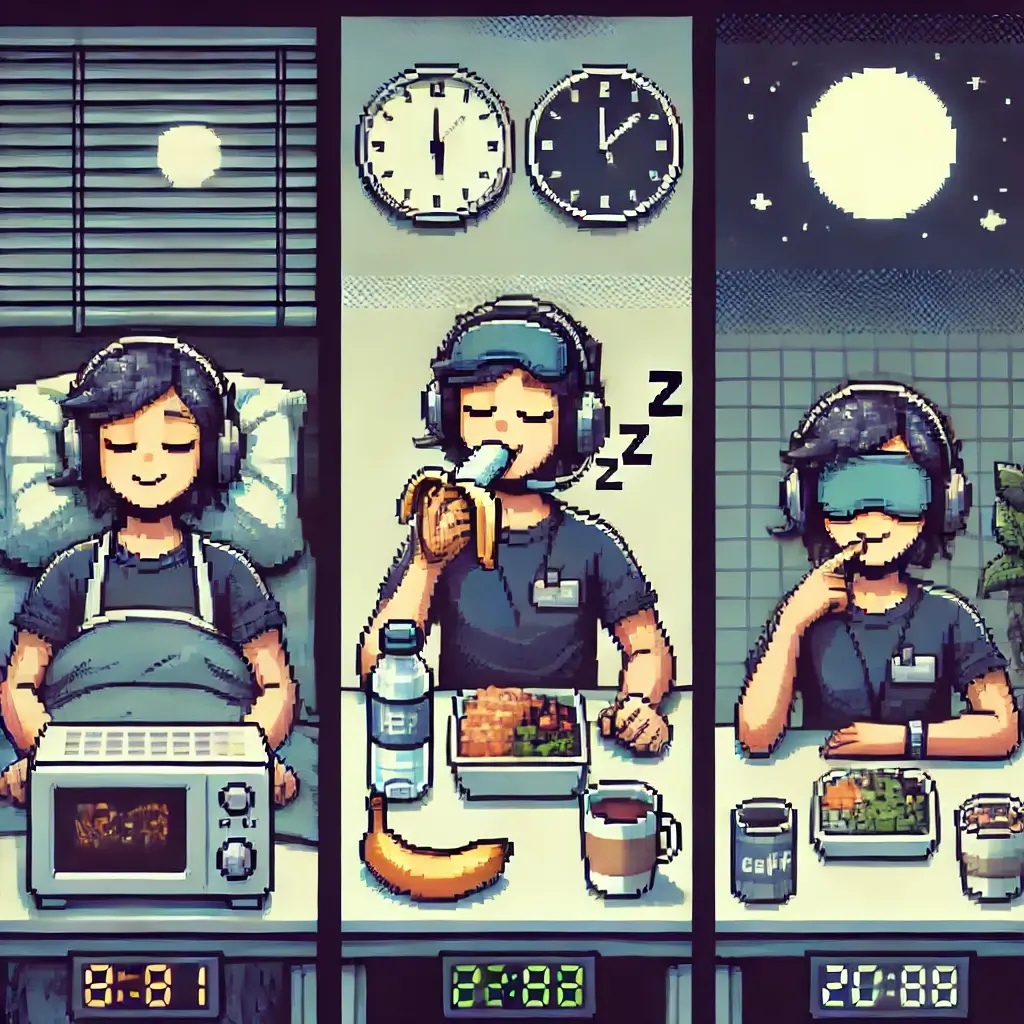
Strategy 2: Fueling Your Body Right – Nutrition and Hydration for Better Sleep
What you put into your body has a monumental impact on your **sleep quality**, especially for **shift workers**.
It’s not just about avoiding coffee before bed; it’s a holistic approach to how you fuel yourself around your unconventional hours.
Think of your body as a high-performance vehicle.
You wouldn’t put cheap, low-grade fuel in a race car, would you?
Similarly, feeding your body junk or at the wrong times can throw your **sleep cycle** into utter chaos.
Timing is Everything: When to Eat
This is perhaps the trickiest part for **shift workers**.
Your digestive system also operates on a **circadian rhythm**.
Eating heavy meals close to when you plan to sleep can disrupt digestion and make it harder to fall asleep.
Aim to finish your main meal at least 2-3 hours before you intend to go to bed.
If you’re on a night **shift**, this might mean having your “dinner” at the start of your shift or in the middle, rather than right before you head home to sleep.
If you absolutely must eat before bed, opt for something light and easily digestible.
Think a small bowl of oatmeal, a banana, or a piece of toast.
Avoid anything spicy, greasy, or high in sugar.
Befriend Certain Foods, Avoid Others
Certain foods contain compounds that can either promote **sleep** or hinder it.
Foods rich in **tryptophan** (an amino acid that helps produce serotonin and **melatonin**) can be beneficial.
Think turkey, chicken, eggs, nuts, seeds, and certain dairy products.
Complex carbohydrates like whole grains can also help, as they can increase **tryptophan’s** availability to the brain.
On the flip side, avoid:
- Heavy, Fatty Meals: They take longer to digest and can lead to discomfort.
- Spicy Foods: Can cause heartburn and indigestion.
- Sugary Snacks: Lead to blood sugar spikes and crashes, disrupting **sleep**.
- Excessive Caffeine: Obvious, right? But remember it has a long half-life. We’ll talk more about this.
- Alcohol: While it might make you feel drowsy initially, alcohol fragments **sleep** later in the night, preventing deep, restorative stages.
Hydration: The Unsung Hero
Dehydration can lead to headaches, fatigue, and general discomfort, all of which are terrible for **sleep**.
Ensure you’re drinking enough water throughout your **shift** and your waking hours.
However, cut back on fluids an hour or two before your target **sleep time** to avoid disruptive trips to the bathroom.
This is a delicate balance, especially if you’re working a long **shift**.
My trick was always to carry a large water bottle and sip consistently, but then slow down as my **shift** ended and I got closer to going home and trying to **sleep**.
Listen to Your Body (and Your Gut)
Everyone is different.
What works for one **shift worker** might not work for another.
Pay attention to how certain foods and meal timings affect your **sleep**.
Keep a **sleep journal** and note what you ate and when, and how you slept.
This self-experimentation is invaluable.
It’s all about creating a mindful relationship with your food and drink, recognizing that every bite and sip can either support or sabotage your quest for quality **sleep**.
Treat your body like the temple it is, and it will thank you with more restful nights (or days!). —
Strategy 3: Strategic Napping and Caffeine Use – Your Secret Weapons
Okay, this is where we get a little tactical, and for **shift workers**, these two tools can be absolute game-changers if used wisely.
Misuse them, and you’re just digging yourself deeper into a **sleep-deprived** hole.
But learn to wield them, and you can significantly improve your alertness during **shifts** and your ability to get proper **sleep** afterward.
The Art of the Power Nap
Napping for **shift workers** is not a luxury; it’s often a necessity.
But not all naps are created equal.
The goal is to get a quick burst of energy without falling into deep **sleep stages**, which can lead to **sleep inertia** (that groggy, disoriented feeling when you wake up from a deep nap).
- Pre-Shift Nap (Prophylactic Nap): If you know you’re heading into a long or particularly demanding **night shift**, a 30-90 minute nap before you leave for work can dramatically improve your alertness and performance. It “tops up” your **sleep reserves**.
- During-Shift Nap (Opportunity Nap): If your work allows for it, a short 20-30 minute nap during a break can be incredibly effective. Find a quiet, dark spot, set an alarm, and stick to it. This can be the difference between powering through the last few hours and feeling completely drained.
- Post-Shift Nap (Transitional Nap): If you’re struggling to make it home and into bed after a **night shift**, a short 20-minute “recovery” nap in your car (safely parked, of course!) or right when you get home can bridge the gap and prevent you from falling asleep at the wheel. However, be careful not to turn this into a long nap that messes with your main **sleep period**.
The sweet spot for a **power nap** is typically 20-30 minutes.
Set an alarm, and if you can, use an app that wakes you gently during a light **sleep stage**.
Avoid napping for longer than 90 minutes unless it’s your primary **sleep period**, as this can throw your **circadian rhythm** further out of whack.
Caffeine: Friend or Foe?
Caffeine is the lifeline for many **shift workers**, but it’s a double-edged sword.
Used strategically, it can boost alertness.
Used haphazardly, it can completely derail your **sleep**.
- Timing is Crucial: Caffeine has a half-life of about 5-6 hours, meaning it takes that long for half of the caffeine to be eliminated from your system. For some people, it can be even longer. This is critical for **shift workers**! If you’re finishing a **night shift** at 7 AM and want to sleep by 8 AM, you should ideally avoid caffeine after 2 AM or even earlier.
- Moderate Your Intake: Don’t rely on massive amounts of caffeine to get through your **shift**.
This just builds tolerance and makes you more reliant.
Stick to moderate amounts and use it as a strategic tool, not a crutch.
- Consider L-Theanine: Found in green tea, L-Theanine can provide a calmer, more focused alertness when combined with caffeine, reducing the jitters. Some people take L-Theanine supplements with their caffeine.
- Know Your Limits: Everyone metabolizes caffeine differently. Pay attention to how it affects you.
If you’re still wired hours after your last cup, you might need to adjust your timing or reduce your intake.
I learned this the hard way!
There were so many times I’d grab that last cup of coffee an hour before my **shift** ended, thinking it would get me through the commute, only to stare at the ceiling for hours once I got home.
It’s all about precision and self-awareness.
By mastering the art of the **power nap** and understanding the pharmacokinetics of caffeine, you can significantly enhance your ability to function effectively during your **shift** and transition more smoothly into your **sleep period**.
These aren’t replacements for proper **sleep**, but they are powerful allies in your fight against **shift work-induced fatigue**. —
Building a Bulletproof Pre-Sleep Routine: Wind Down Like a Pro
Alright, so you’ve nailed your **sleep environment**, you’re eating right, and you’re a wizard with naps and caffeine.
Now, let’s talk about the transition – that crucial period between being awake and trying to fall asleep.
For **shift workers**, this is even more critical because your body is likely still in “go mode” from your **shift**.
A consistent **pre-sleep routine** signals to your brain that it’s time to wind down, regardless of what the clock says outside.
Think of it as a calming, predictable ritual that prepares your mind and body for rest.
Aim for at least 60-90 minutes of this wind-down time before you plan to hit the hay.
Ditch the Screens: Blue Light is the Enemy
This is probably the hardest one for most people, but it’s non-negotiable for **shift workers**.
Smartphones, tablets, computers, and even TVs emit **blue light**, which actively suppresses **melatonin** production.
Remember, we’re trying to trick your brain into thinking it’s dark and time for **sleep**.
Exposure to **blue light** is like shining a spotlight on your **pineal gland** and yelling, “STAY AWAKE!”
Turn off all screens at least an hour before your target **sleep time**.
If you absolutely must use a screen, invest in **blue light blocking glasses** or use apps that shift your screen to warmer tones (like Night Shift on iOS or f.lux on desktop).
But honestly, the best solution is just to disconnect.
Warm Bath or Shower: The Temperature Drop Trick
Remember how your body temperature needs to drop slightly for **sleep**?
A warm bath or shower about 90 minutes before bed can actually help facilitate this.
The warm water raises your core body temperature, and then, as you step out, your body rapidly cools down, mimicking the natural temperature drop that occurs before **sleep**.
Plus, it’s incredibly relaxing!
Relaxing Activities: Calm Your Mind
This is where you tailor the routine to your preferences.
The goal is to engage in activities that are calming and non-stimulating.
Some ideas:
- Reading a physical book: (not on a backlit e-reader)
- Listening to calming music or a podcast: (without looking at the screen)
- Gentle stretching or yoga: Nothing strenuous, just enough to release tension.
- Journaling: Get those swirling thoughts out of your head and onto paper.
- Meditation or deep breathing exercises: Apps like Calm or Headspace can guide you.
- Light tidying: A clean space can lead to a clear mind, but don’t start a major cleaning project!
Avoid anything that gets your adrenaline pumping – no intense workouts, no stressful conversations, no planning your next shift, and definitely no checking emails.
Consistency, Consistency, Consistency!
This is the secret sauce to any successful **sleep routine**.
Your body thrives on predictability.
Try to follow your **pre-sleep routine** at roughly the same time every “sleep day,” even on your days off if possible.
The more consistent you are, the more your body will learn to associate these activities with impending **sleep**, and the easier it will be to drift off.
It’s about training your brain, just like you’d train a puppy.
With patience and repetition, your brain will start to recognize the cues and prepare for **sleep** automatically.
Give yourself this gift of a structured wind-down, and you’ll be amazed at the difference it makes to your **sleep quality** as a **shift worker**. —
The Power of Light Exposure: Hacking Your Circadian Rhythm
We’ve talked about how light is the grand master of your **circadian rhythm**.
Now, let’s look at how **shift workers** can strategically use it to their advantage.
This isn’t about avoiding light entirely (which isn’t practical or healthy); it’s about controlling your exposure to send the right signals to your internal clock.
Think of it like adjusting the hands on a clock – we’re trying to reset your internal timepiece to align better with your **shift schedule**.
Strategic Light Exposure During Your Shift
If you’re working a **night shift**, you want to maximize your exposure to bright light during your working hours.
This tells your brain, “Hey, it’s daytime! Stay awake and alert!”
Try to work in well-lit areas.
Some **shift workers** even use **light therapy lamps** (those bright, full-spectrum lamps used for Seasonal Affective Disorder) in their workspace during the first half of their **night shift**.
Just be mindful not to use them too close to the end of your **shift**, as that can make it harder to wind down for **sleep** later.
Blocking Light on Your Way Home
This is critical.
As soon as your **night shift** ends, and you’re heading home (presumably in daylight), you need to minimize light exposure.
This is where those stylish, dark wraparound sunglasses come in.
Put them on *before* you leave the building.
Avoid looking directly at the sun.
The goal is to prevent that morning light from hitting your eyes and sending the “wake up!” signal to your brain.
Think of yourself as a vampire trying to avoid the sun – dramatic, perhaps, but effective!
Daylight Exposure on Days Off
Even if you’re a **night worker**, getting some natural daylight exposure on your days off, especially in the morning (if you’re trying to shift to a more “normal” schedule), can help reinforce a healthier **circadian rhythm**.
Just a short walk outside can do wonders for your mood and overall well-being, in addition to helping regulate your internal clock.
However, if you’re consistently on **night shifts**, you might want to maintain a relatively consistent **sleep-wake schedule** even on your days off to avoid constant **jet lag**.
This means your “daylight exposure” might happen when others are sleeping.
Red Light and Dim Lighting in the Evening/Pre-Sleep
When it’s your “evening” (i.e., the hours leading up to your **sleep time**, even if it’s during the day), start dimming the lights.
Use lamps with lower wattage bulbs.
Consider using red or amber lights.
These wavelengths of light are less disruptive to **melatonin** production than **blue light**.
Some people even use special “sleep lamps” that emit only red light in the hours before bed.
It’s about creating a gradual transition from “day” to “night” for your brain, even when the actual sun is doing the opposite.
By consciously managing your light exposure, you’re not just passively reacting to your **shift schedule**; you’re actively influencing your body’s **circadian rhythm**, empowering it to help you achieve better **sleep** and alertness.
It’s a powerful tool, so use it wisely! —
When to Seek Professional Help: Don’t Suffer in Silence
Listen, I’ve shared a lot of strategies here, and for many **shift workers**, implementing these tips can make a profound difference.
But sometimes, despite your best efforts, the struggle persists.
And that’s perfectly okay and normal.
There’s no shame in admitting you need a little extra help.
In fact, it’s a sign of strength and self-awareness.
If you’ve diligently tried these **sleep optimization** techniques for several weeks or months, and you’re still experiencing significant issues, it might be time to consult a healthcare professional.
When to Consider Reaching Out:
- Persistent Insomnia or Excessive Sleepiness: If you’re consistently unable to fall asleep, stay asleep, or are overwhelmingly sleepy during your **shifts** and waking hours, even after trying the strategies above.
- Significant Impact on Daily Life: If your **sleep problems** are affecting your mood, relationships, work performance, or safety (e.g., falling asleep at the wheel).
- Symptoms of Shift Work Sleep Disorder (SWSD): This is a recognized **sleep disorder** that a professional can diagnose and help you manage.
- Concerns About Underlying Conditions: Sometimes, what feels like **shift work sleep problems** could be symptoms of other underlying **sleep disorders** like **sleep apnea** or **Restless Legs Syndrome**, which require specific medical treatment.
- If You’re Feeling Overwhelmed or Depressed: Chronic **sleep deprivation** can take a serious toll on your mental health. Don’t hesitate to talk to someone if you’re struggling emotionally.
Who to Talk To:
- Your Primary Care Physician: Start here. They can rule out any basic medical issues and refer you to a specialist if needed.
- A Sleep Specialist: These doctors specialize in diagnosing and treating **sleep disorders**.
They can conduct **sleep studies** and offer tailored interventions.
- A Cognitive Behavioral Therapist (CBT-I): Cognitive Behavioral Therapy for Insomnia (CBT-I) is often considered the gold standard treatment for chronic insomnia and can be highly effective for **shift workers**.
It teaches you strategies to change thought patterns and behaviors that interfere with **sleep**.
Remember, prioritizing your **sleep** is not a luxury; it’s a fundamental component of your health and safety.
You wouldn’t hesitate to see a doctor for a persistent cough or a broken bone, so why would you tough out chronic **sleep problems**?
Many resources are available, and a professional can provide personalized guidance that a blog post simply can’t.
Don’t be afraid to advocate for your own well-being.
Your future, well-rested self will thank you. —
Final Thoughts on Your Sleep Journey: You Got This!
Wow, we’ve covered a lot, haven’t we?
From understanding the sneaky ways **shift work** messes with your **circadian rhythm** to building a **sleep sanctuary** and mastering the art of the **power nap**.
It might feel like a lot to implement, and I won’t lie – it takes effort, consistency, and a fair bit of trial and error.
There will be days when you nail it, and days when your **sleep schedule** feels like a complete disaster.
And that’s totally okay.
The key is to keep showing up for yourself.
This isn’t about perfection; it’s about progress.
Every small step you take towards better **sleep** is a win.
Remember, you’re not alone in this.
**Shift workers** around the globe face these same challenges every single day.
But by being proactive, understanding your body, and implementing these strategies, you’re empowering yourself to not just survive your **shift work** life, but to truly thrive in it.
Your **sleep** is an investment in your health, your happiness, and your overall quality of life.
So, take what you’ve learned here, start with one or two changes that feel manageable, and build from there.
You are strong, you are resilient, and you absolutely deserve good **sleep**.
Go forth and conquer those Zs!
Need more resources? Check out these trusted sites:
CDC NIOSH – Shift Work and Long Work Hours
Shift work, Sleep optimization, Circadian rhythm, Sleep environment, Napping strategies