
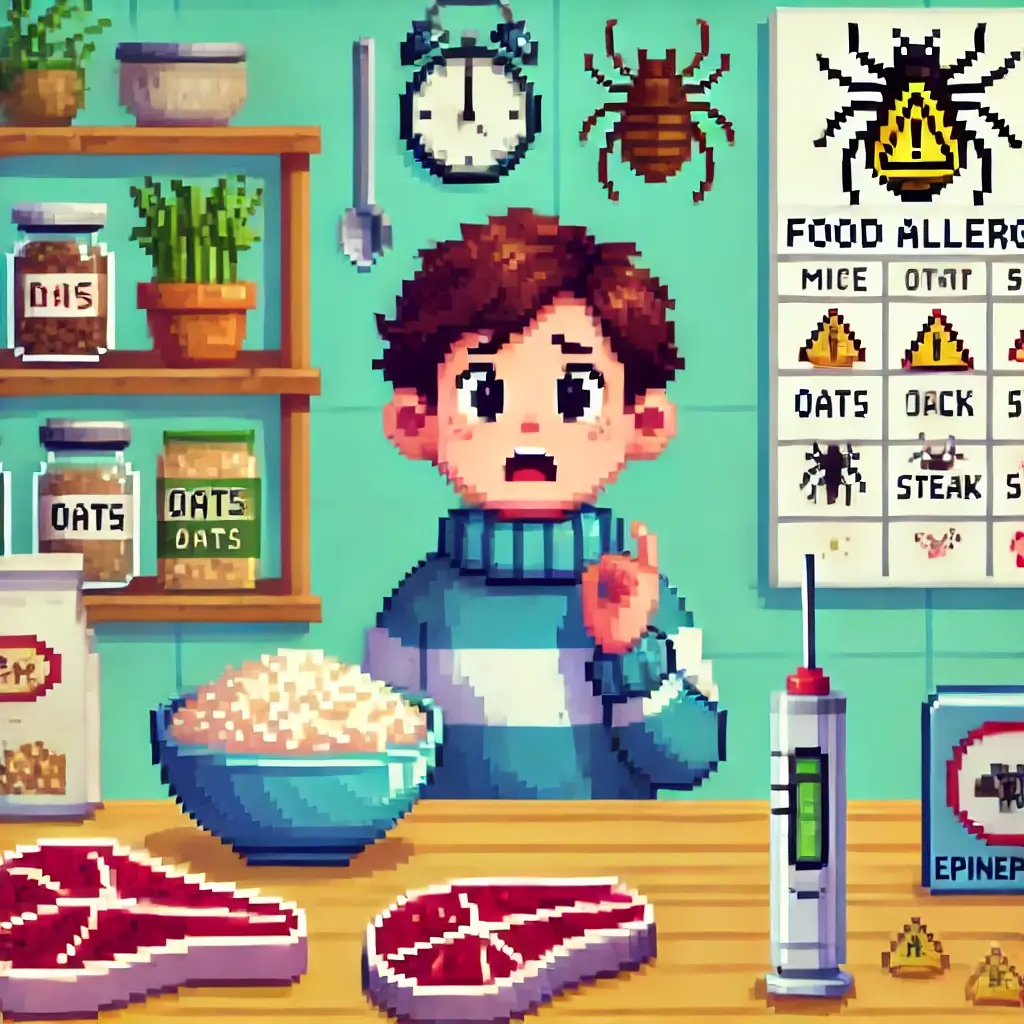
5 Surprising Allergies in Kids: Beyond the Big 8! Your Child’s Health, Our Mission!
Alright, fellow parents, buckle up!
We’re diving deep into a topic that keeps many of us up at night: pediatric allergies.
Now, I know what you’re thinking – peanuts, milk, eggs, wheat, soy, tree nuts, fish, shellfish – the usual suspects, right?
We’re all pretty well-versed in the “Big 8.”
But what happens when your child reacts to something totally unexpected?
Something that doesn’t fit neatly into those common categories?
That’s where the real detective work begins, and let me tell you, it can feel like a lonely journey.
As a parent who’s been there, done that, and bought the t-shirt (probably a specially dyed, hypoallergenic one!), I understand the sheer terror and frustration that comes with navigating these uncharted allergic waters.
It’s not just about avoiding certain foods; it’s about understanding a complex interplay of environmental factors, genetics, and sometimes, just plain bad luck.
But here’s the good news: you’re not alone, and there’s a world of knowledge and support out there.
Let’s pull back the curtain on some of these less common, yet equally impactful, pediatric allergies.
We’ll explore how to spot them, how to manage them, and most importantly, how to help your child thrive despite them.
Consider this your essential guide to becoming an allergy-savvy superhero for your little one.
No more guesswork, no more frantic late-night Google searches!
Let’s get this sorted, together.
Table of Contents
What Are We Missing? Unveiling the Hidden Allergic Triggers
Okay, so we all know the drill with the common food allergies.
You avoid peanuts, diligently check labels for dairy, and keep an eagle eye out for cross-contamination.
But what about when your child has symptoms that just don’t add up?
Maybe it’s severe vomiting after eating rice, or a mysterious rash after touching a certain toy, or even a terrifying reaction after exercising.
These are the moments that make you scratch your head and think, “Wait, what just happened?”
It’s like trying to solve a puzzle with half the pieces missing.
The world of pediatric allergies is far more expansive and nuanced than just the standard roster.
Many parents find themselves in a challenging limbo, trying to pinpoint triggers that don’t fit the typical mold.
And let me tell you, it’s exhausting.
This section is all about shining a light on those lesser-known, often baffling, allergic conditions.
We’re talking about reactions that might not involve IgE antibodies (the usual suspects in immediate allergic reactions) but are equally debilitating and, in some cases, life-threatening.
The goal here isn’t to scare you, but to empower you with knowledge.
Because when it comes to your child’s health, being prepared and informed is your best weapon.
Let’s uncover these hidden triggers together, so you can approach your doctor with more specific questions and advocate effectively for your child.
Knowledge is power, especially when you’re battling invisible foes.
Pediatric Allergy, Unseen Allergens, Allergy Triggers, Rare Allergies, Child Health
Food Protein-Induced Enterocolitis Syndrome (FPIES): A Gut-Wrenching Reality
Imagine your baby, usually so happy and content, suddenly becoming violently ill hours after eating something as seemingly innocuous as rice cereal or oats.
We’re talking profuse vomiting, diarrhea, extreme lethargy, and sometimes even shock.
No hives, no immediate swelling, just a devastating gastrointestinal reaction that looks more like a severe stomach bug than an allergy.
This, my friends, is the terrifying reality of Food Protein-Induced Enterocolitis Syndrome, or FPIES (pronounced “F-Pies”).
It’s not an IgE-mediated allergy, meaning it doesn’t show up on standard allergy skin prick tests or blood tests that check for IgE antibodies.
This is precisely why it’s often misdiagnosed as a viral infection or something else entirely, leaving parents in a desperate search for answers.
My heart goes out to every parent who has experienced the sheer panic of an FPIES reaction.
It’s brutal to witness.
Common triggers for FPIES include rice, oats, barley, milk, soy, and sometimes poultry or fish.
But here’s the kicker: any food can potentially be an FPIES trigger.
The reactions are delayed, typically occurring 2-4 hours after ingestion, making it incredibly difficult to pinpoint the culprit without careful observation and, often, an oral food challenge performed under medical supervision.
Management primarily involves strict avoidance of the trigger food(s).
It sounds simple, but when your child reacts to staples like rice or oats, meal planning becomes a logistical nightmare.
Thankfully, most children outgrow FPIES by age 3-5, but during those crucial early years, it requires diligent care and a strong support system.
If you suspect FPIES, it’s absolutely crucial to consult with a pediatric allergist or gastroenterologist who has experience with this condition.
They can guide you through diagnosis, safe introduction of new foods, and emergency action plans.
Understanding FPIES is the first step in regaining control and ensuring your child’s safety and nutritional well-being.
FPIES, Food Allergy, Gastrointestinal Allergy, Non-IgE Allergy, Pediatric Gastroenterology
Alpha-Gal Syndrome: When a Tick Bite Changes Everything
Alright, this one is truly wild, and it sounds like something out of a sci-fi movie, but it’s very real.
Imagine going about your life, enjoying a juicy steak or a burger, and then suddenly, hours later, breaking out in hives, swelling, or even experiencing anaphylaxis.
And it’s all thanks to a tiny tick bite you might not even remember getting.
Welcome to the bizarre world of Alpha-Gal Syndrome (AGS), also known as the red meat allergy.
This isn’t your typical immediate allergy.
AGS is an allergy to a sugar molecule called alpha-gal, which is found in most mammals (think beef, pork, lamb, venison, and even some dairy products and gelatin).
The kicker?
It’s transmitted through the bite of certain ticks, most notably the Lone Star tick in the U.S., but other ticks worldwide can also trigger it.
The tick bite essentially sensitizes the person to alpha-gal.
The delayed reaction is what makes AGS so sneaky and difficult to diagnose.
Symptoms often appear 3-6 hours after ingesting mammalian meat, long after the meal has passed, leading to a lot of head-scratching from both patients and doctors who aren’t familiar with it.
For kids, this can be particularly challenging as their diets often include processed foods, candies, and medications that might contain mammalian derivatives like gelatin.
Imagine trying to explain to a child why they can’t have their favorite gummy bears anymore!
Diagnosis involves a blood test to check for IgE antibodies to alpha-gal.
Management is, you guessed it, strict avoidance of mammalian meat and products.
This means becoming a label-reading ninja, as alpha-gal can hide in unexpected places.
For parents of kids with AGS, it’s about becoming experts in poultry, fish, and plant-based proteins, and always being prepared with epinephrine.
It’s a huge lifestyle change, but with proper management, kids with AGS can lead full, active lives.
Alpha-Gal Syndrome, Red Meat Allergy, Tick Bite Allergy, Delayed Anaphylaxis, Lone Star Tick
Ready to dive deeper into some other unique allergy challenges?
Let’s keep going!
Contact Dermatitis: The Unseen Itch-Inducers
We’ve all seen a mild rash here and there on our kids, right?
Maybe from a new laundry detergent or a rough fabric.
But what if the rash is persistent, severely itchy, blistering, and just won’t go away, despite your best efforts with creams?
This is often the tell-tale sign of contact dermatitis, specifically allergic contact dermatitis.
Unlike immediate allergic reactions that involve IgE antibodies, allergic contact dermatitis is a delayed hypersensitivity reaction, meaning the rash can appear 24-72 hours after skin contact with an allergen.
This delay makes identifying the culprit incredibly frustrating, like trying to find a needle in a haystack!
For children, common culprits can be surprising.
Nickel, found in jewelry, belt buckles, zippers, and even some electronic devices (think tablet cases or headphones), is a major one.
Imagine your child constantly scratching their belly button because of the nickel in their jeans button – maddening!
Other frequent offenders include fragrances (in soaps, lotions, detergents), preservatives (in wipes, creams), certain dyes in clothing or shoes, adhesives (like in bandages), and even some plants (like poison ivy, oak, or sumac).
I once had a friend whose child developed a severe rash on their feet, and after months of trying everything, they discovered it was the rubber in the child’s favorite sneakers.
Who would’ve thought?
Diagnosis often involves a patch test, where small amounts of suspected allergens are applied to the skin under patches and observed for a few days.
It’s not fun, but it’s incredibly effective in pinpointing the specific allergen.
Management is all about strict avoidance, which can be challenging when the allergen is ubiquitous.
This might mean choosing nickel-free clothing, fragrance-free personal care products, or even researching specific dyes in toys and clothing.
It requires an eagle eye and a commitment to label reading, but the relief for your child from constant itching is priceless.
Contact Dermatitis, Skin Allergy, Eczema, Nickel Allergy, Fragrance Allergy, Patch Test
Exercise-Induced Anaphylaxis: The Unexpected Workout Danger
Picture this: your child is having a fantastic time playing soccer, running around with friends, when suddenly they start to feel itchy, break out in hives, or even experience difficulty breathing and lightheadedness.
It’s not a bee sting or a hidden food; it’s the exercise itself, sometimes combined with a specific food eaten beforehand, that triggers a severe allergic reaction.
This is Exercise-Induced Anaphylaxis (EIA), a rare but potentially life-threatening condition.
EIA can occur with any type of physical exertion, from casual play to competitive sports.
What makes it particularly tricky is that it often isn’t just the exercise alone.
In many cases, it’s “food-dependent exercise-induced anaphylaxis” (FDEIA), where the reaction only occurs if a specific food (common culprits include wheat, shellfish, celery, or peanuts) is eaten within a few hours before exercise.
If the food is eaten without exercise, or exercise is performed without the food, no reaction occurs.
Talk about a detective puzzle!
I can only imagine the fear of a parent watching their child suddenly collapse or struggle to breathe during a simple game.
It’s an allergy that turns something as healthy and joyful as physical activity into a potential minefield.
Diagnosis involves a careful medical history, sometimes combined with supervised exercise challenges (often in a hospital setting) after ingesting the suspected food.
It’s crucial to identify if a food trigger is involved.
Management involves strict avoidance of the trigger food before exercise, sometimes avoidance of exercise for a certain period after eating any food, and always carrying two epinephrine auto-injectors.
For children with EIA, it’s about finding safe ways to be active, perhaps engaging in sports where bursts of activity are less intense, or adjusting meal times around physical activity.
Educating coaches, teachers, and caregivers is paramount to ensure they understand the condition and how to respond in an emergency.
Exercise-Induced Anaphylaxis, FDEIA, Anaphylaxis, Sports Allergy, Food and Exercise Reaction
Drug Allergies: More Than Just Penicillin
When you think of drug allergies, penicillin probably pops into your head first, right?
It’s the most commonly reported drug allergy, and for good reason.
But the truth is, children can be allergic to a vast array of medications, and these reactions can range from a mild rash to severe, life-threatening anaphylaxis.
This is an area where vigilance is absolutely key, because medication is often essential for treating other conditions.
Beyond antibiotics, other common culprits include non-steroidal anti-inflammatory drugs (NSAIDs) like ibuprofen, certain anticonvulsants, and even local anesthetics used by dentists.
Sometimes, it’s not the active ingredient itself but an inactive component of the medication, like a dye or a preservative, that triggers the reaction.
One of the biggest challenges with drug allergies in children is that they often receive multiple medications for various illnesses, making it hard to pinpoint which one caused the reaction.
Plus, a child might react to a medication they’ve taken safely many times before, which can be incredibly confusing and alarming for parents.
I recall a story of a child who developed a severe rash and fever after receiving a common antibiotic, even though they had taken it without issue a year prior.
It turned out to be a delayed hypersensitivity reaction, and a completely different type of allergic response than what the parents initially expected.
Diagnosis usually relies heavily on a detailed medical history of the reaction.
For some drugs, skin tests or blood tests (though less reliable than for food allergies) might be available.
In specific situations, a supervised drug challenge might be considered, but this is always done with extreme caution in a controlled medical environment.
The core of managing drug allergies is strict avoidance of the identified medication and any chemically related drugs.
This means clear communication with all healthcare providers – pediatricians, specialists, dentists, and pharmacists – ensuring that your child’s drug allergies are prominently noted in their medical records.
Always carry an up-to-date list of all your child’s allergies and share it at every medical appointment.
It’s your child’s safety net.
Drug Allergy, Medication Allergy, Penicillin Allergy, Anaphylaxis, Pediatric Drug Reactions
The Diagnosis Dilemma: Unraveling the Mystery
So, you suspect your child has an allergy, but it’s not one of the usual suspects.
You’ve seen weird symptoms, inconsistent reactions, and perhaps even felt dismissed by healthcare providers who aren’t familiar with these less common conditions.
This is where the real “diagnosis dilemma” kicks in.
Getting an accurate diagnosis for these nuanced allergies is arguably the most challenging part of the entire journey.
Why?
Because many of these conditions don’t present with the classic immediate IgE-mediated symptoms (hives, swelling, wheezing) that most doctors are trained to recognize.
For FPIES, it’s the delayed gastrointestinal distress that mimics a stomach bug.
For Alpha-Gal, it’s the 3-6 hour delay, making it easy to overlook the red meat connection.
For contact dermatitis, the rash develops slowly, and pinpointing the exact skin contact can be a nightmare.
And for EIA, it’s the combination of food and exercise that makes it so elusive.
The key to unlocking these mysteries often lies in finding a specialist who truly understands these complexities.
A board-certified pediatric allergist-immunologist is your best bet.
They have the expertise and the tools to consider these “outside the box” possibilities.
When you go to your appointment, be prepared to be a meticulous historian.
Keep a detailed diary of symptoms, potential triggers, timing, and any other relevant observations.
The more information you can provide, the better.
This might include:
What did your child eat/do/touch in the 24-48 hours before the reaction?
What were the exact symptoms, and in what order did they appear?
How long did the symptoms last?
What made the symptoms better or worse?
Diagnostic tests might include specialized blood tests (like specific IgE for alpha-gal), patch testing (for contact dermatitis), or carefully monitored oral food challenges/exercise challenges in a controlled medical setting.
It can be a long road, sometimes filled with false starts and dead ends, but don’t give up.
Your persistence is your child’s best advocate.
Trust your parental instincts – if something feels off, keep seeking answers.
Diagnosis, Pediatric Allergist, Allergy Testing, Symptom Tracking, Medical History
Living Beyond the Diagnosis: Practical Management and Daily Life
Okay, so you’ve finally got a diagnosis – a huge victory!
But now what?
The diagnosis is just the beginning; the real work lies in seamlessly integrating allergy management into your daily life.
This is where the rubber meets the road, and it requires planning, perseverance, and a good dose of creativity.
Here are some battle-tested strategies to help you and your child navigate life beyond the diagnosis:
Becoming a Label Detective (and a Kitchen Alchemist!)
No matter the allergy, reading labels becomes your superpower.
For FPIES, it means understanding hidden forms of milk, soy, or grains.
For Alpha-Gal, it’s scrutinizing every ingredient for mammalian products, including surprising ones like gelatin in medications or marshmallows.
For contact dermatitis, it’s poring over ingredient lists of personal care products, clothing, and toys.
You’ll become an expert in alternative ingredients and learn to cook and bake in ways you never thought possible.
Embrace the challenge – some of my best “allergy-friendly” recipes have come from pure desperation!
Emergency Preparedness: Your Non-Negotiable Lifeline
For any allergy with the potential for severe reactions (like FPIES in some cases, Alpha-Gal, or EIA), carrying epinephrine auto-injectors (like EpiPen or Auvi-Q) is non-negotiable.
Always have two, always know how to use them, and ensure anyone caring for your child does too.
Work with your allergist to create a clear, written emergency action plan and share it widely with schools, daycares, sports coaches, and family members.
Regular refreshers on how to use the auto-injector are essential – practice with a trainer!
School and Social Life: Navigating the World Outside Your Home
This is often where the real anxiety kicks in.
Schedule meetings with school nurses, teachers, and administrators to educate them about your child’s specific allergy and emergency plan.
Provide them with safe snacks, meals, and any necessary medications.
For contact dermatitis, this might mean educating them about materials to avoid in the classroom.
For EIA, it’s explaining the need to avoid specific foods before physical education or recess.
For social events like birthday parties, consider bringing a safe treat for your child or communicating proactively with the host.
The more you educate, the safer your child will be, and the more confident you’ll feel.
Empowering Your Child: The Best Self-Advocate
As your child grows, teach them about their allergy in an age-appropriate way.
Help them understand what they’re allergic to, what symptoms to look for, and how to tell an adult if they feel unwell.
Empowering them with this knowledge is one of the greatest gifts you can give them.
It fosters independence and reduces their own anxiety.
Make sure they know it’s never their fault if a reaction occurs.
Living with a less common allergy can feel isolating, but remember, you’re building resilience, adaptability, and an incredible depth of knowledge for your child.
It’s tough, but you’ve got this.
Allergy Management, Emergency Plan, School Allergy, Social Life, Child Empowerment
Advocacy and Support: Building Your Allergy A-Team
Navigating the world of pediatric allergies, especially the less common ones, can feel like you’re on a deserted island, frantically waving for help.
But trust me, you’re not alone.
Building your “allergy A-Team” – a network of medical professionals, support groups, and informed loved ones – is absolutely crucial for your mental well-being and your child’s safety.
Your Medical Dream Team: The Experts Who Get It
First and foremost, your pediatric allergist-immunologist is your captain.
They should be knowledgeable about both common and rare allergies.
Don’t hesitate to seek a second opinion if you feel your concerns aren’t being adequately addressed.
For FPIES, a pediatric gastroenterologist might also be a key player.
For unique conditions like Alpha-Gal, you might even find yourself consulting with infectious disease specialists or dermatologists.
Ensure all your child’s doctors are communicating and on the same page regarding their allergy management.
Support Groups: Your Tribe Understands
Connecting with other parents who are navigating similar challenges is a game-changer.
Online forums, local support groups, and social media communities dedicated to specific allergies (like FPIES support groups or Alpha-Gal communities) can provide invaluable practical advice, emotional support, and a sense of belonging.
These are the people who truly “get it” – the anxiety of new food introductions, the frustration of misdiagnoses, and the joy of a successful food challenge.
They’re a treasure trove of lived experience.
Educating Your Circle: Friends, Family, and Beyond
Don’t be afraid to educate your extended family and close friends.
It might feel repetitive at times, but their understanding and vigilance can significantly reduce risk and stress.
Provide them with clear, concise information about the allergy, what to do in an emergency, and how they can help.
Sometimes, a simple “allergy cheat sheet” given to grandparents or babysitters can make all the difference.
Remember, advocating for your child isn’t being “overprotective” – it’s being responsible and proactive.
You are your child’s voice, and your persistence ensures their safety and quality of life.
Advocacy, Allergy Support, Pediatric Allergist, Support Groups, Allergy Education
Hope on the Horizon: Emerging Treatments and Research
If you’re reading this, you might feel a bit overwhelmed by the complexities of pediatric allergies beyond the common ones.
It’s a lot to take in, isn’t it?
But here’s a crucial message I want to leave you with: there is immense hope on the horizon.
The field of allergy research is constantly evolving, with new insights, diagnostic tools, and potential treatments emerging at an exciting pace.
Oral Immunotherapy (OIT) and Beyond
While most widely known for common food allergies like peanut, the concept of controlled desensitization, or oral immunotherapy (OIT), is being explored for other allergens and conditions.
Though not yet standard for FPIES or Alpha-Gal, the underlying principles of retraining the immune system are a major focus of research.
Imagine a future where children with these complex allergies could safely tolerate their trigger foods!
It’s not science fiction; it’s the direction research is heading.
Biologics and Targeted Therapies
For severe and difficult-to-manage allergic conditions, biologic medications (drugs derived from living organisms that target specific parts of the immune system) are becoming increasingly important.
While currently used more for conditions like severe asthma or chronic hives, research is continually exploring their potential for other complex allergic diseases, offering a glimmer of hope for more targeted and effective treatments.
Improved Diagnostics
The diagnostic tools are becoming more refined as well.
Researchers are working on better ways to identify non-IgE mediated allergies like FPIES and to improve the accuracy of tests for conditions like Alpha-Gal Syndrome.
Faster, more reliable diagnostics mean less time in limbo for families and quicker access to appropriate management.
Increased Awareness and Education
Perhaps one of the most significant strides is the growing awareness among the medical community and the general public about these less common allergies.
The more people know, the faster diagnoses can be made, and the better support systems become.
Blogs like this one, patient advocacy groups, and dedicated research foundations are all contributing to a more informed and supportive environment for families.
So, take heart.
While the journey with a child’s complex allergy can be challenging, it’s not a static landscape.
Science is on your side, and breakthroughs are happening.
Stay informed, stay connected, and never lose sight of the incredible resilience your child (and you!) possess.
The future for pediatric allergy management is brighter than ever.
Emerging Treatments, Allergy Research, Immunotherapy, Biologics, Allergy Awareness
Useful Resources & External Links:
Here are some incredibly helpful and reliable resources to further your knowledge and connect with support:
Food Allergy Research & Education (FARE)
This is an invaluable resource for all things food allergy, including less common ones. Their website has a wealth of information, research updates, and advocacy tools. They’re a true powerhouse in the allergy world.
Specifically dedicated to Food Protein-Induced Enterocolitis Syndrome, this foundation provides excellent resources, research, and a supportive community for families navigating FPIES. A must-visit if FPIES is part of your journey.
American College of Allergy, Asthma & Immunology (ACAAI) – Alpha-Gal Syndrome
The ACAAI is a professional organization for allergists, and their website offers reliable, doctor-reviewed information on various allergic conditions, including a dedicated section on Alpha-Gal Syndrome. A great place for authoritative medical information.
National Eczema Association – Contact Dermatitis
While focusing on eczema broadly, this organization has valuable information on contact dermatitis, its triggers, and management strategies, including tips for identifying irritants and allergens in products. Very helpful for skin-related allergies.
Pediatric Allergy, Rare Allergies, FPIES, Alpha-Gal, Contact Dermatitis