
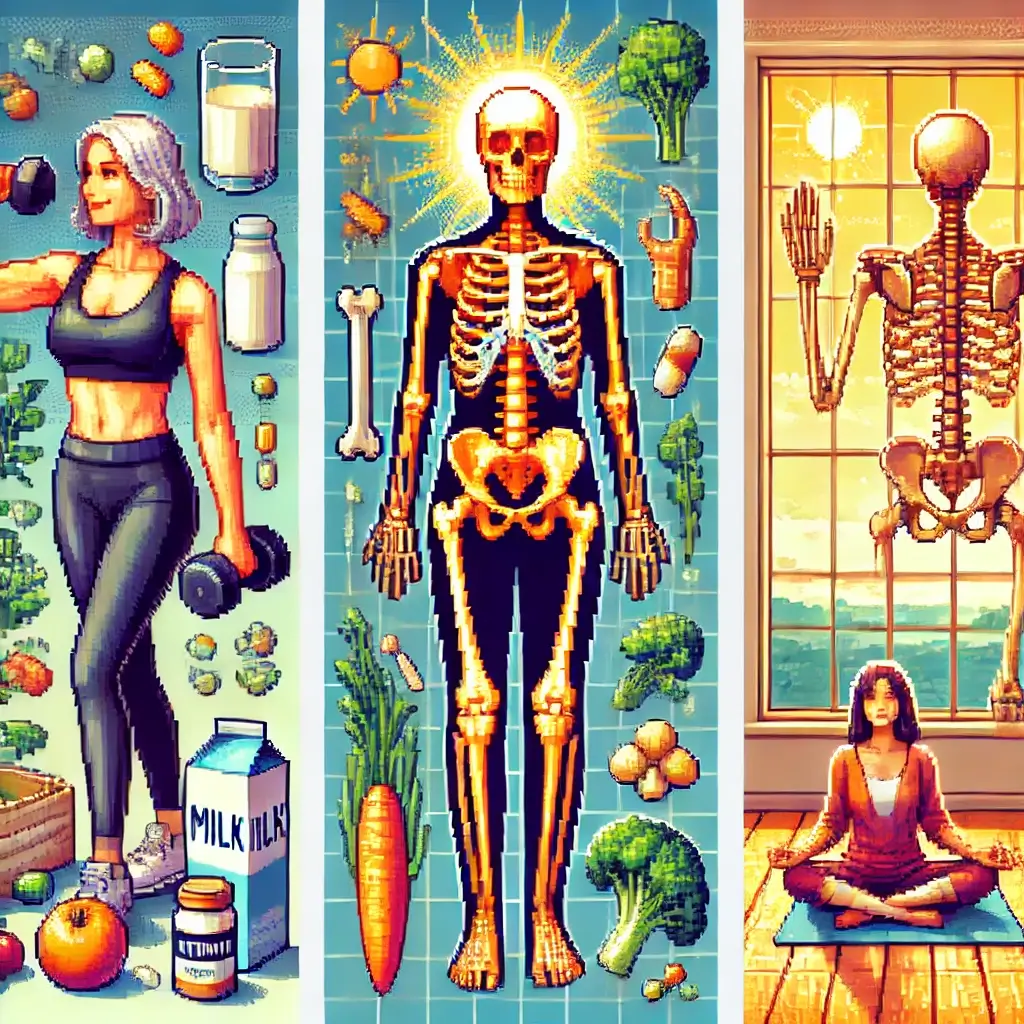
Don’t Let Your Bones Betray You: 3 Critical Keys to Maintaining Bone Density After Menopause!
There I was, sitting across from a wonderful woman—let’s call her Carol—in my clinic. She was 55, vibrant, and full of life, but her face was etched with worry.
She had just gotten her first bone density scan, and the results were a gut punch: osteopenia.
It’s not osteoporosis yet, but it’s the yellow light on the dashboard telling you something is off.
Her doctor had rattled off some terms and handed her a leaflet, but Carol felt lost.
The words were clinical, cold, and a little terrifying.
She looked at me and asked, “Am I doomed to become one of those old ladies who shatters a hip from a minor fall?”
My heart sank a little for her, but I also saw an opportunity.
An opportunity to reassure her and to equip her with the tools to take back control.
This isn’t about being doomed; it’s about being empowered.
It’s about understanding that while menopause changes everything, it doesn’t mean the end of a strong, healthy body.
It means we have to be smarter, more intentional, and a little more badass about how we care for ourselves.
If you’re a post-menopausal woman reading this, I want you to know one thing: you are not alone, and you are not helpless.
We lose bone density as we age, that’s just a biological fact.
But the dramatic drop we see after menopause—sometimes up to 20% in the first 5-7 years—can feel like a cruel joke from Mother Nature.
That drop is because of a nosedive in estrogen, the hormone that was your bones’ best friend for decades.
Without estrogen, the bone-building process slows down significantly, and the bone-resorption (breakdown) process speeds up.
It’s an uneven race, and your bones are losing.
But here’s the good news—we can influence this race.
We can give our bones the right fuel, the right stress, and the right support to keep them strong and resilient.
This isn’t just about preventing fractures; it’s about maintaining your independence, your mobility, and your confidence for years to come.
Think of your bones not as static structures, but as a living, breathing bank account.
For most of your life, you were making regular deposits.
After menopause, the interest rates tank, and you start making withdrawals faster than you’d like.
My job, and this post’s purpose, is to teach you how to open a high-yield savings account for your bones and start making those deposits again.
So, let’s stop being scared and start getting strategic.
Let’s dive into the three critical keys that can change your post-menopausal bone destiny.
These aren’t just tips; they’re non-negotiable pillars for any woman who wants to live a long, active life without the fear of a fragile skeleton.
Let’s get to it.
—
Table of Contents
—
Nutrition: Your Secret Weapon Against Bone Density Loss
First things first: you can’t build a brick house without bricks.
And you can’t build strong bones without the right raw materials.
This isn’t new information, but it’s often overlooked or misunderstood.
Many of us think we’re eating “healthy,” but are we eating for our bones?
Post-menopause, our nutritional needs change. Drastically.
What worked in your 30s is not going to cut it now.
It’s like trying to run a marathon on the fuel you used for a 5k—you’re going to hit a wall, and that wall is called a fracture.
—
Calcium and Vitamin D: The Dynamic Duo
I know, I know, you’ve heard this a million times, but hear me out.
It’s not just about getting some calcium; it’s about getting the right amount and making sure your body can actually use it.
Think of calcium as the money in your bone bank, and Vitamin D as the bank teller who processes the deposits.
Without a good teller, that money just sits there, useless.
After age 50, the recommendation for women jumps to 1,200 mg of calcium per day.
That’s a significant amount.
To put it in perspective, a glass of milk has about 300 mg.
So, you’d need four glasses of milk a day just to hit that number.
For many women, that’s just not realistic or comfortable.
That’s where a bone-friendly diet comes into play.
Don’t just think “dairy.”
Yes, dairy is a fantastic source, but there are so many others.
Leafy greens like kale and collard greens are packed with calcium, as are fortified foods like orange juice and cereals.
Sardines and canned salmon with bones are a fantastic (and often forgotten) source.
Tofu, almonds, and broccoli also contribute.
The goal is to get as much as you can from food because our bodies absorb it better that way.
But let’s be honest, hitting 1,200 mg a day through diet alone is tough.
This is where supplementation becomes your best friend.
But not all supplements are created equal.
For Vitamin D, the recommended amount is 600-800 IU daily for women over 50.
This is crucial because Vitamin D isn’t just a teller; it’s a security guard, a manager, and a compliance officer all rolled into one.
It helps your gut absorb calcium, and without it, that calcium is just passing through your system.
Our bodies can produce Vitamin D from sun exposure, but that gets tricky with sunscreen, seasons, and skin pigmentation.
Plus, as we age, our skin’s ability to produce Vitamin D decreases.
So, a good quality Vitamin D3 supplement is almost non-negotiable for most post-menopausal women.
Make sure you’re getting enough of this dynamic duo.
Talk to your doctor, maybe get your Vitamin D levels checked, and figure out a plan that works for you.
It’s not about perfection; it’s about consistency.
—
Beyond the Basics: Magnesium, Vitamin K, and Protein
It’s easy to get tunnel vision with calcium and Vitamin D, but let’s not forget the supporting cast.
Think of them as the stagehands and lighting crew that make the show run smoothly.
Magnesium is an absolute rock star.
It’s involved in over 300 biochemical reactions in your body, and a big one is activating Vitamin D.
Without enough magnesium, your Vitamin D can’t do its job properly.
Magnesium is found in foods like nuts, seeds, leafy greens, and whole grains.
Vitamin K is another unsung hero.
Specifically, Vitamin K2 helps shuttle calcium out of your arteries and into your bones where it belongs.
This is huge because it not only helps with bone density but also protects your cardiovascular system from calcification.
Sources include fermented foods like natto, and certain cheeses and egg yolks.
And let’s not forget Protein.
Our bones are a living matrix of collagen, and protein is what builds that matrix.
Think of it as the scaffolding that holds all the calcium in place.
As we get older, we need more protein to maintain muscle mass and, in turn, support our bones.
Aim for a source of lean protein with every meal—chicken, fish, legumes, tofu, Greek yogurt.
It’s not just about what you eat, but how you combine it to create a symphony of bone-building goodness.
Don’t be overwhelmed.
Start with one small change, like adding a handful of almonds to your daily snack or making sure you have a protein source with every meal.
Little changes add up to big results.
—
Exercise: The Non-Negotiable Pillar of Strong Bones
You can eat all the kale and drink all the milk in the world, but without exercise, it’s like trying to sculpt a statue with a spoon.
Your bones need stress to get stronger.
They are smart; they respond to the forces you put on them by remodeling and getting denser.
After menopause, this is more critical than ever.
Weight-bearing and muscle-strengthening exercises are your best friends.
Think of them as sending a memo to your bones saying, “Hey, we’re not retired yet! We need you to stay strong and ready for action.”
This isn’t about becoming a bodybuilder or running a marathon (unless you want to!).
It’s about making smart, consistent choices that challenge your bones without putting you at risk.
—
Weight-Bearing Exercise: Fighting Gravity, One Step at a Time
Weight-bearing exercises are any activities where your feet and legs support your body weight.
Gravity is your ally here.
Walking is good. Brisk walking is better.
Dancing, hiking, and jogging are great.
If you’re just starting out, even 30 minutes of brisk walking most days of the week is a fantastic start.
The key is consistency and gradual progression.
You wouldn’t jump into a deadlift with 200 pounds on the bar, so don’t try to run a 10k if you haven’t run in 20 years.
Start with a simple walk, and as you get stronger, you can incorporate hills, stairs, or even a light jog.
The goal is to put a little impact on your bones to stimulate them to rebuild.
Think of it as gentle, persuasive pressure.
—
Strength Training: Your Personal Bodyguard
This is where the magic really happens for a post-menopausal woman.
Strength training—lifting weights, using resistance bands, or even just using your own body weight—does two amazing things.
First, it puts direct, targeted stress on your bones, telling them to get stronger.
When you lift a weight, the muscles pulling on the bones send a signal that says, “reinforce this area!”
Second, and this is just as important, it builds muscle mass.
Strong muscles support your joints, improve your balance, and most importantly, protect you from falls.
A fall is a huge risk for anyone with low bone density, and a strong body is your best defense.
Don’t be intimidated by the weight room.
You can start at home with a set of light dumbbells or even resistance bands.
Focus on compound movements that work multiple muscle groups: squats, lunges, push-ups (even against a wall!), and rows.
These exercises not only build muscle but also engage your core, improving your stability.
Start with two or three strength training sessions a week.
If you have any doubts, consider working with a trainer for a few sessions to learn proper form.
It’s an investment in your future self.
—
Medication and Lifestyle Changes: Your Strategic Advantage
For some women, diet and exercise alone aren’t enough.
A DEXA scan might show that bone loss is happening faster than we can counteract it, or that bone density is already low enough to warrant more aggressive action.
This isn’t a sign of failure; it’s a sign that we need to bring in the big guns.
Your doctor is your partner here, not just a person who hands you a prescription.
Be proactive in these conversations.
Ask questions, understand your options, and make a plan together.
—
When to Consider Medication
Medications for osteoporosis aren’t a last resort; they’re a powerful tool in your arsenal.
There are several types, and your doctor will help you decide which is right for you based on your bone density, fracture risk, and overall health.
Bisphosphonates are a common class of drugs that slow bone breakdown.
Think of them as putting a lock on your bone bank to prevent those rapid withdrawals.
There are also newer medications that actually stimulate bone formation, effectively helping you make new deposits.
For some women, particularly those who enter menopause early or have severe symptoms, Hormone Replacement Therapy (HRT) can be an excellent option.
It replaces the estrogen your body is no longer producing, which has a direct and powerful effect on bone density.
The decision to start medication is a personal one, but it’s a conversation every post-menopausal woman should have with her doctor.
Don’t wait until you have a fracture to take action.
—
Small Changes, Big Impact: Lifestyle Tweaks
Beyond the big three (nutrition, exercise, medication), there are a few other lifestyle choices that can make a surprisingly big difference.
Ditch the Vices: Smoking is an absolute bone killer.
It lowers your estrogen levels and directly harms bone-building cells.
If you smoke, quitting is one of the best things you can do for your bones and your entire body.
Excessive alcohol consumption also interferes with calcium absorption and increases your risk of falls.
Moderation is key here.
Watch Your Medications: Believe it or not, some common medications can contribute to bone loss.
Long-term use of corticosteroids (like prednisone), certain heartburn medications, and some antidepressants can all have an effect.
This isn’t a reason to stop taking your medication, but it is a reason to talk to your doctor and make sure you’re taking proactive steps to protect your bones while on them.
Fall Prevention: This might sound simple, but it’s critically important.
If your bone density is low, a fall isn’t just an inconvenience; it’s a major event that can change your life.
Take simple steps like removing tripping hazards from your home, making sure your home is well-lit, and wearing low-heeled shoes with good grip.
Exercises that focus on balance, like Tai Chi or yoga, are also incredibly beneficial.
—
So there you have it—a roadmap to empower you.
Remember Carol? We put a plan in place.
She started taking a calcium and Vitamin D supplement, focused on eating more bone-friendly foods, and joined a strength training class for women her age.
Six months later, her follow-up scan showed her bone density was stable, and she was doing squats with weights she never thought she’d be able to lift.
Her worry was replaced with a quiet confidence.
She wasn’t just surviving menopause; she was thriving in it.
And you can too.
Don’t be a passive observer of your own body.
Take control, make a plan, and start building the strong, resilient body you deserve for the rest of your life.
Your bones will thank you for it.
—
Keywords: post-menopausal, bone density, osteoporosis, bone health, fracture risk