
3 Surprising Natural & Lifestyle Hacks to FINALLY Conquer Your Restless Legs Syndrome
If you’ve ever found yourself in the middle of the night, desperate for relief from that incessant, creepy-crawly feeling in your legs, you know the struggle is real.
You’ve likely tried everything—from stretching to massaging, maybe even pacing the halls like a caged lion.
That relentless urge to move, that tingling, pulling, or aching sensation that only gets worse when you’re trying to rest, has a name: Restless Legs Syndrome (RLS).
Also known as Willis-Ekbom disease, RLS is more than just an annoyance; it’s a thief that steals your sleep and your peace of mind.
I’ve been there, and I know how frustrating it is to feel like you’re the only one silently suffering.
For years, I believed there were no real solutions, just temporary fixes that barely scratched the surface.
But what if I told you that some of the most effective relief comes not from a pill bottle, but from simple, natural, and often overlooked changes to your lifestyle?
Forget the generic advice you’ve read a hundred times.
In this guide, we’re diving deep into some surprisingly effective strategies that have helped me and countless others find genuine, lasting relief.
We’ll explore how small tweaks to your daily routine, diet, and mindset can make a monumental difference.
Think of me as your fellow traveler on this journey—I’m not a doctor, but I am an expert in what it feels like to live with this condition.
I’ve put in the time, done the research, and, most importantly, lived the experience.
Let’s get your nights back, one peaceful step at a time.
Table of Contents
—
1. A Deep Dive into What Restless Legs Syndrome Really Is
Let’s start with a bit of a reality check.
For too long, RLS has been misunderstood, often dismissed as “just a little fidgeting.”
But anyone who’s felt it knows it’s so much more.
Imagine a feeling that is part tingling, part crawling, and part an overwhelming, almost magnetic pull to get up and move.
It’s a sensation that’s nearly impossible to describe to someone who hasn’t experienced it.
When you finally find a comfortable position in bed, your legs decide it’s time for a midnight rebellion.
The moment you stop moving, the sensations return with a vengeance.
It’s a cruel cycle that can leave you exhausted, irritable, and feeling completely helpless.
I remember one particularly bad night, a few years back.
I had a big presentation the next morning, and I desperately needed sleep.
My legs, however, had other plans.
The electric, buzzy feeling started as soon as my head hit the pillow.
I tried everything—hot baths, cold packs, stretching, even a bizarre attempt at doing lunges in my bedroom at 2 a.m.
Nothing worked.
I finally drifted off around 4 a.m., only to be woken by my alarm an hour later, feeling like I hadn’t slept at all.
It’s this kind of lived experience that fuels my passion for finding real solutions.
The medical community is still unraveling the exact causes of RLS, but a few key players have emerged.
One of the leading theories points to a dysfunction in the brain’s dopamine pathways.
Dopamine is a neurotransmitter that plays a crucial role in controlling muscle movement.
When there’s an imbalance, it can lead to the uncontrolled leg movements and sensations characteristic of RLS.
Another major factor is iron deficiency.
Iron is essential for the production of dopamine.
Without enough iron, your brain can’t produce the dopamine it needs, creating a domino effect that can trigger RLS symptoms.
I’ll get into this more in a bit because it was a huge breakthrough for me.
RLS can also be a secondary condition, meaning it’s a symptom of another underlying issue.
Pregnancy, kidney failure, peripheral neuropathy, and certain medications can all trigger or worsen RLS.
This is why it’s so important to work with a healthcare professional to rule out any other conditions.
But for many of us, myself included, it’s a primary condition, and that’s where lifestyle and natural solutions really shine.
Understanding what RLS is—and what it isn’t—is the first step toward taking back control.
It isn’t just a nervous habit or a quirk; it’s a legitimate neurological condition that deserves to be taken seriously.
Now that we’ve established a foundation, let’s get into the nitty-gritty of how you can start fighting back. —
2. The Mind-Body Connection: How Your Brain and Gut Health Impact RLS
Alright, let’s talk about something a little less obvious, but incredibly powerful: the gut-brain axis.
It might sound a bit “woo-woo,” but bear with me here, because this was a game-changer for my RLS.
You’ve probably heard the phrase “gut feeling,” and it turns out there’s some real science behind it.
Your gut is home to trillions of bacteria, a complex ecosystem known as the microbiome.
This isn’t just about digestion; these little critters produce a whole host of compounds, including neurotransmitters like serotonin and—you guessed it—dopamine.
When your gut microbiome is out of whack, it can affect your brain chemistry, leading to a domino effect of issues.
A few years ago, I was struggling with not only RLS but also some digestive issues.
My doctor suggested I try adding some fermented foods to my diet and taking a high-quality probiotic.
I was skeptical at first, but I figured it couldn’t hurt.
Within a few weeks, I started noticing something remarkable.
Not only did my digestion improve, but the intensity and frequency of my RLS symptoms began to decrease.
The connection was so clear it was almost unbelievable.
It was like I had been trying to fix a leaky faucet by mopping up the floor, when the real problem was a broken pipe in the wall.
By addressing my gut health, I was getting to a root cause of the potential dopamine imbalance.
This isn’t just my story, either.
Research is increasingly showing a link between gut health, inflammation, and neurological conditions.
For example, a diet rich in processed foods and sugar can promote a pro-inflammatory environment in the gut.
Chronic inflammation can then cross the gut-brain barrier and negatively impact brain function, including the dopamine pathways that are so critical for RLS.
So, what can you do about it?
Think of your gut like a garden.
To make it flourish, you need to feed it the right stuff.
That means incorporating prebiotic and probiotic-rich foods into your diet.
Prebiotics are the food for your good gut bacteria—think garlic, onions, bananas, and oats.
Probiotics are the good bacteria themselves, found in foods like yogurt with live cultures, kefir, sauerkraut, and kimchi.
You don’t have to go all-in overnight.
Start small.
Maybe swap out your morning cereal for a bowl of Greek yogurt with some berries.
Or add a spoonful of sauerkraut to your sandwich.
These small changes can add up to a big difference in how you feel, both in your gut and in your legs.
It’s a holistic approach that acknowledges the interconnectedness of our bodies.
We often treat symptoms in isolation, but the body is a complex, beautiful system.
By nurturing one part, we can bring healing to another.
I’ve also found that reducing my intake of inflammatory foods—things like excess sugar, fried foods, and highly processed items—has had a noticeable positive effect.
It’s not about being perfect, it’s about making conscious choices most of the time.
The goal is to create an environment where your body can thrive, which in turn helps your brain and nervous system function more optimally.
—
3. My Personal “Aha!” Moment: The Iron, Dopamine, and RLS Link
Let’s talk about a real lightbulb moment I had on my RLS journey: iron deficiency.
This might be the most crucial piece of the puzzle for many people, especially if you’ve tried everything else and nothing seems to work.
I remember sitting in a doctor’s office, feeling completely defeated.
I had just spent another night wide awake, and I was at my wit’s end.
The doctor, a kind and patient woman, suggested we do a full blood panel.
She was particularly interested in my ferritin levels, which is the protein that stores iron in your body.
Turns out, my ferritin was on the low side.
Not low enough to be considered anemic, but low enough that she said it could absolutely be contributing to my RLS.
This was a revelation.
I had always associated iron deficiency with fatigue and anemia, not with the maddening sensations in my legs.
She explained that the brain needs iron to produce dopamine.
Even if your blood iron levels are technically “normal,” your brain might not be getting the supply it needs.
When the brain’s iron stores are low, dopamine production can falter, leading to the motor control issues that are a hallmark of RLS.
This connection between iron and dopamine is a big deal in the scientific community, and it’s a huge reason why iron supplementation is often a first-line treatment for RLS.
But here’s the thing: you can’t just start taking iron supplements on your own.
Too much iron can be toxic, so it’s essential to get your levels checked and work with a doctor.
My doctor recommended a specific type of iron supplement that was well-absorbed and gentle on my stomach.
The change wasn’t instant, but after a few weeks, I started to notice a significant improvement.
The intensity of the sensations lessened, and the frequency of the attacks decreased.
It was like the volume on my RLS had been turned down from a deafening roar to a manageable hum.
In addition to supplementation, I also started paying more attention to iron-rich foods.
Things like spinach, lentils, beans, and red meat became staples in my diet.
I also learned that pairing iron-rich foods with Vitamin C (think a squeeze of lemon on your spinach) helps your body absorb the iron more efficiently.
This whole experience taught me a vital lesson: RLS is not just in your head.
There are real, physiological reasons behind it, and sometimes the solution is as simple as correcting a nutritional imbalance.
If you’ve been struggling with RLS, please, please talk to your doctor about getting your iron and ferritin levels checked.
It could be the missing piece of your puzzle, just like it was for me.
I know it’s frustrating to feel like you’re chasing ghosts, but sometimes the answer is right there in your blood, waiting to be found. —
4. The 3 Surprising Natural & Lifestyle Solutions for Restless Legs Syndrome
Now for the main event—the three surprising solutions that have made the biggest impact on my Restless Legs Syndrome.
These aren’t just a list of things to try; they are fundamental shifts in how I approach my health.
I’m sharing these with you not as a doctor, but as a fellow RLS warrior who has seen real results.
Let’s dive in.
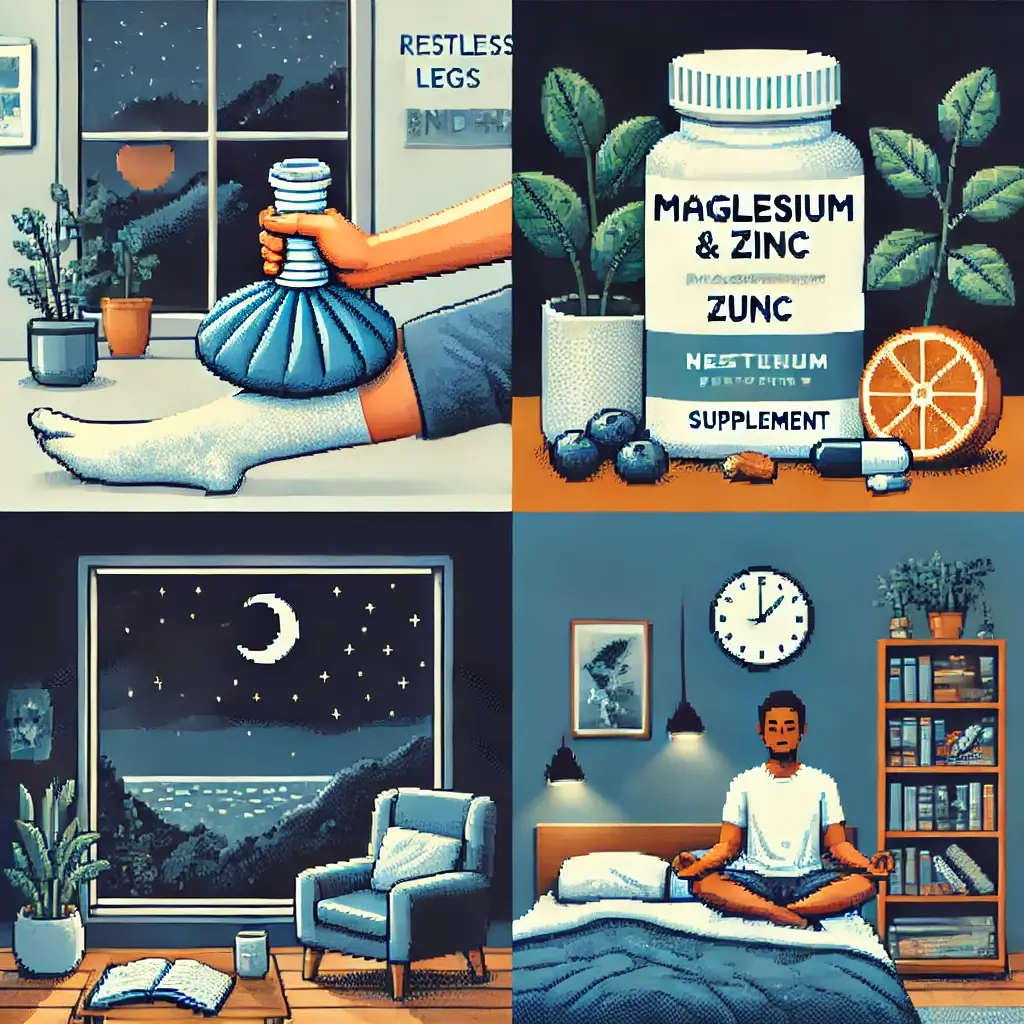
1. The Cold Therapy Surprise: A Simple Ice Pack Can Be Your Best Friend
You’ve likely heard about using heat to soothe muscles.
And while a warm bath can be nice, I discovered that for RLS, cold therapy is often a much more effective and immediate solution.
I know, I know—it sounds counterintuitive.
But here’s the science-y part: RLS is a neurological condition, and the cold can help to disrupt the nerve signals that are causing those maddening sensations.
A few years ago, in the middle of an RLS attack, I was so desperate for relief that I grabbed a bag of frozen peas from the freezer and pressed it against my calves.
The immediate, intense cold provided an instant distraction from the creepy-crawly feeling.
But what was even more surprising was that the relief lasted even after I removed the ice pack.
The cold seemed to calm down the overactive nerves, providing a temporary but much-needed break from the symptoms.
Now, I have a dedicated ice pack in the freezer, specifically for RLS.
When an attack strikes, I wrap it in a thin towel and apply it to my calves or the tops of my thighs for about 10-15 minutes.
It’s not a cure, but it’s a powerful tool in my arsenal for getting through a tough night.
The theory is that the cold decreases blood flow to the area and numbs the nerve endings, essentially hitting the “reset” button on the sensory overload.
This simple, cost-effective trick has saved me from countless sleepless nights.
2. The Magnesium-Zinc Power Duo: A Match Made in Heaven for Restless Legs Syndrome
We talked about iron, but let’s not forget about a couple of other crucial minerals: magnesium and zinc.
Many people with RLS are deficient in one or both of these, and correcting the imbalance can have a profound effect.
Magnesium is a natural muscle relaxant.
It plays a key role in over 300 biochemical reactions in the body, including nerve function and muscle contraction.
Without enough magnesium, your muscles can become tense and prone to cramping, which can exacerbate RLS symptoms.
I started taking a magnesium supplement—specifically magnesium glycinate, which is known for being easily absorbed and gentle on the stomach.
The first thing I noticed was a general sense of calm and better sleep quality.
Then, I started to realize that my RLS attacks were becoming less frequent and less severe.
Zinc, while often overshadowed by magnesium, is also incredibly important.
It’s a cofactor in many enzymatic processes, including the production of dopamine.
A zinc deficiency can therefore also impact your brain’s ability to regulate movement.
When I combined a magnesium supplement with a diet rich in zinc (think seeds, nuts, and legumes), I saw an even greater improvement.
It’s like they work together, a real power duo for calming the nervous system and supporting proper brain function.
Before starting any supplements, it’s always a good idea to talk to your doctor.
But for me, magnesium and zinc have been indispensable tools in my RLS management plan.
3. The Power of “Counter-Pressure”: A Simple Technique for Instant Relief
This last one is a bit of a personal discovery, but it has saved me more times than I can count.
When you feel that RLS sensation start to creep in, your natural instinct is to move your legs.
But what if you could fight fire with fire, or in this case, pressure with pressure?
I call it “counter-pressure.”
When the tingling starts in my calf, I immediately apply firm, steady pressure to the area.
This can be done with my hands, a foam roller, or even by just pressing my leg against the edge of the bed.
The idea is to overwhelm the nervous system with a different, more powerful sensation.
It’s a distraction technique, but a highly effective one.
The pressure provides a new sensory input that can interrupt the RLS signal, giving your brain something else to focus on.
It’s like when you hit your funny bone and your immediate reaction is to rub the spot to make the tingling go away.
This technique is similar—you’re using a physical sensation to override a neurological one.
The key is to apply firm, consistent pressure.
A light touch won’t do it.
You need to really “lean into it,” so to speak.
I’ve found this works best for me when I’m trying to fall asleep.
The moment I feel the familiar twitch, I use my hand to press down hard on the muscle, holding it for 30 seconds or so.
More often than not, it buys me enough time to drift off before the sensation returns.
It’s a simple, drug-free solution that’s always available, and it has become an essential part of my nightly routine.
—
5. Beyond the Basics: Sleep Hygiene and Movement Therapies
While the three solutions above were my biggest breakthroughs, a comprehensive RLS management plan needs a few other key components.
Think of these as the foundational pillars that support everything else.
They might seem like common sense, but when you’re in the throes of an RLS attack, it’s easy to forget the basics.
The Unsung Hero: Sleep Hygiene
RLS and poor sleep are a classic chicken-and-egg problem.
The RLS keeps you from sleeping, and the lack of sleep can make your RLS worse.
Breaking this cycle is crucial, and it starts with good sleep hygiene.
This means creating an environment that is conducive to sleep.
Think of your bedroom as a sanctuary for rest—dark, cool, and quiet.
Ditch the screens at least an hour before bed.
The blue light from phones, tablets, and TVs can suppress melatonin, the hormone that tells your body it’s time to sleep.
Instead, try reading a book, listening to calming music, or doing some gentle stretching.
I also found that having a consistent bedtime routine helps.
It signals to your body that it’s time to wind down.
This could be anything from a warm bath (yes, a warm bath can be helpful for relaxation, even if cold therapy is better for an active attack) to a few minutes of meditation.
The goal is to calm your mind and body so that when you do get into bed, you’re not already on high alert for an RLS attack.
Movement as Medicine: The Right Kind of Exercise
When your legs are restless, the last thing you want to do is sit still.
And for RLS, movement is often a source of temporary relief.
But the type of movement matters.
Vigorous exercise too close to bedtime can actually make your symptoms worse.
The key is to find a balance.
I’ve found that moderate, regular exercise during the day is incredibly helpful.
Things like brisk walking, cycling, or swimming can improve circulation and reduce the intensity of RLS symptoms.
The endorphins released during exercise can also have a calming effect on the nervous system.
And if an attack strikes, I’ve learned that gentle stretches or a short walk can be just what the doctor ordered.
Just don’t overdo it.
A 10-minute walk around the living room is often more effective than a full-blown workout.
The goal is to get the blood flowing and the muscles moving without causing a jolt to your system.
Think of it as giving your restless legs what they want—movement—but on your terms.
This combination of good sleep hygiene and the right kind of movement can create a powerful one-two punch against RLS.
They don’t offer instant relief like an ice pack, but they are the slow, steady burn that can lead to long-term improvement.
—
6. The Power of Your Plate: Foods to Embrace and Avoid
Let’s talk food.
What you put into your body has a monumental impact on your RLS symptoms, and for me, this was a huge area of discovery.
I’m not a nutritionist, but I’ve learned through trial and error what foods help me and what foods are a one-way ticket to a sleepless night.
The “Yes” List: Foods to Embrace
We’ve already talked about iron, magnesium, and zinc, so let’s focus on foods that are rich in these and other important nutrients.
First up: **potassium-rich foods**.
Potassium is an electrolyte that helps with nerve signaling and muscle contraction.
Low levels of potassium can lead to muscle cramps, which can feel a lot like RLS.
Think bananas, sweet potatoes, avocados, and leafy greens.
I make it a point to have a banana or a sweet potato a few times a week, and it seems to help keep things calm.
Next, **calcium-rich foods**.
Calcium is another mineral that’s essential for muscle and nerve function.
Dairy products, fortified plant-based milks, and dark leafy greens are great sources.
A glass of warm milk before bed is a classic for a reason—it’s soothing and provides a dose of calcium.
Finally, **Vitamin D**.
Some studies have shown a link between low Vitamin D levels and RLS severity.
Getting some sun exposure is the best way to get Vitamin D, but you can also find it in fatty fish like salmon and in fortified foods.
The “No” List: Foods to Avoid (or Limit)
This is where things get personal, and you have to be your own detective.
But there are a few common culprits that many people with RLS find make their symptoms worse.
**Caffeine** is at the top of this list.
It’s a stimulant, and it can rev up your nervous system, making it more prone to the sensations of RLS.
I used to love my afternoon coffee, but I noticed that on the days I had it, my RLS was significantly worse that night.
Now, I stick to a single cup in the morning and switch to herbal tea in the afternoon.
**Alcohol** is another big one.
While a nightcap might seem like a good idea to help you relax and fall asleep, alcohol actually disrupts your sleep cycle and can make RLS symptoms more severe later in the night.
I’ve learned the hard way that even one glass of wine can be a gamble.
Finally, **sugar and processed foods**.
These can cause blood sugar spikes and crashes, which can affect your nervous system and promote inflammation.
Remember our discussion about the gut-brain axis?
A diet high in processed foods is not friendly to your gut, and that can have a ripple effect.
This isn’t about being perfect—it’s about being mindful.
I still enjoy a cookie now and then.
But I’ve learned that the more I stick to a diet of whole, unprocessed foods, the better my legs feel.
Listen to your body.
Keep a food diary for a few weeks and see if you can find any patterns between what you eat and how your RLS behaves.
—
7. The Role of Stress and Mindfulness in Taming RLS
Let’s be honest: living with RLS is stressful.
The anticipation of a bad night can be enough to trigger an attack.
This is where the mind-body connection comes full circle.
Stress and anxiety are major triggers for RLS.
When you’re stressed, your body releases a cocktail of hormones that can put your nervous system on high alert, making it more susceptible to the sensations of RLS.
I’ve found that managing my stress levels is just as important as watching what I eat or what supplements I take.
Mindfulness and Meditation: A Calming Anchor
I used to think meditation was for people who had their lives completely together.
But after a particularly rough patch with RLS, a friend suggested I try a guided meditation app.
I was a total skeptic, but I gave it a shot.
Even just 10 minutes a day of focused breathing and mindfulness had a noticeable effect.
It didn’t make my RLS disappear, but it helped me change my relationship with the sensations.
Instead of panicking and getting more stressed, I learned to observe the feelings without judgment.
I would breathe into them, acknowledging their presence without letting them take over.
This small shift in mindset made a huge difference.
It’s like the difference between being a passenger in a car with a frantic driver versus a calm one.
Even if the road is bumpy, you feel a lot safer with a calm driver at the wheel.
The Power of a “Wind-Down” Routine
We talked about sleep hygiene, but let’s take it a step further and talk about a wind-down routine specifically for calming your nervous system.
This isn’t just about turning off your phone; it’s about actively transitioning from the day’s stress to a state of rest.
My routine now includes a few key things:
Gentle stretching: A few minutes of stretching my calves and hamstrings can help release tension.
Journaling: Writing down my thoughts and worries from the day helps me get them out of my head and onto the paper.
Deep breathing: Simple box breathing (inhale for four, hold for four, exhale for four, hold for four) can work wonders for calming my nervous system.
This routine is not a magic bullet, but it’s a powerful way to signal to my body that it’s time to relax.
I’m telling you, the less stressed I am, the less my RLS acts up.
It’s a simple equation that has been a lifesaver for me.
If you’ve been focused solely on the physical aspects of RLS, I urge you to give the mental and emotional side a try.
It might just be the missing link you’ve been searching for.
—
8. Putting It All Together: Your Personalized RLS Action Plan
So there you have it—my journey and the natural and lifestyle solutions that have helped me regain control over my nights.
I’m not promising that every single one of these will work for you.
RLS is a highly personal condition, and what works for one person might not work for another.
But I truly believe that by using these strategies as a starting point, you can start to piece together your own personalized plan.
Think of this as a toolbox.
You might not need every tool in there, but having a variety of options can make all the difference when an attack strikes.
Here’s a quick summary of your action plan:
Talk to your doctor: Get your iron and ferritin levels checked. This is the most important first step.
Experiment with cold therapy: Have an ice pack ready and try it the next time an attack strikes.
Consider a magnesium and zinc supplement: After consulting with your doctor, see if these make a difference.
Practice “counter-pressure”: Apply firm, steady pressure to the affected area for instant, temporary relief.
Improve your sleep hygiene: Create a calm, dark, and cool bedroom environment and ditch the screens before bed.
Find your movement sweet spot: Incorporate moderate exercise into your day and gentle stretching before bed.
Be mindful of your diet: Increase your intake of iron, potassium, and calcium-rich foods, and limit caffeine, alcohol, and sugar.
Prioritize stress reduction: Try meditation, deep breathing, or a calming nightly routine to settle your nervous system.
Living with Restless Legs Syndrome is a marathon, not a sprint.
There will be good nights and bad nights.
But by being proactive and taking a holistic approach, you can significantly reduce the frequency and intensity of your symptoms.
You deserve a good night’s sleep, and with a little patience and a lot of self-compassion, you can get there.
Don’t give up.
Your peaceful nights are waiting for you.
Restless Legs Syndrome, RLS, natural remedies, lifestyle changes, magnesium