
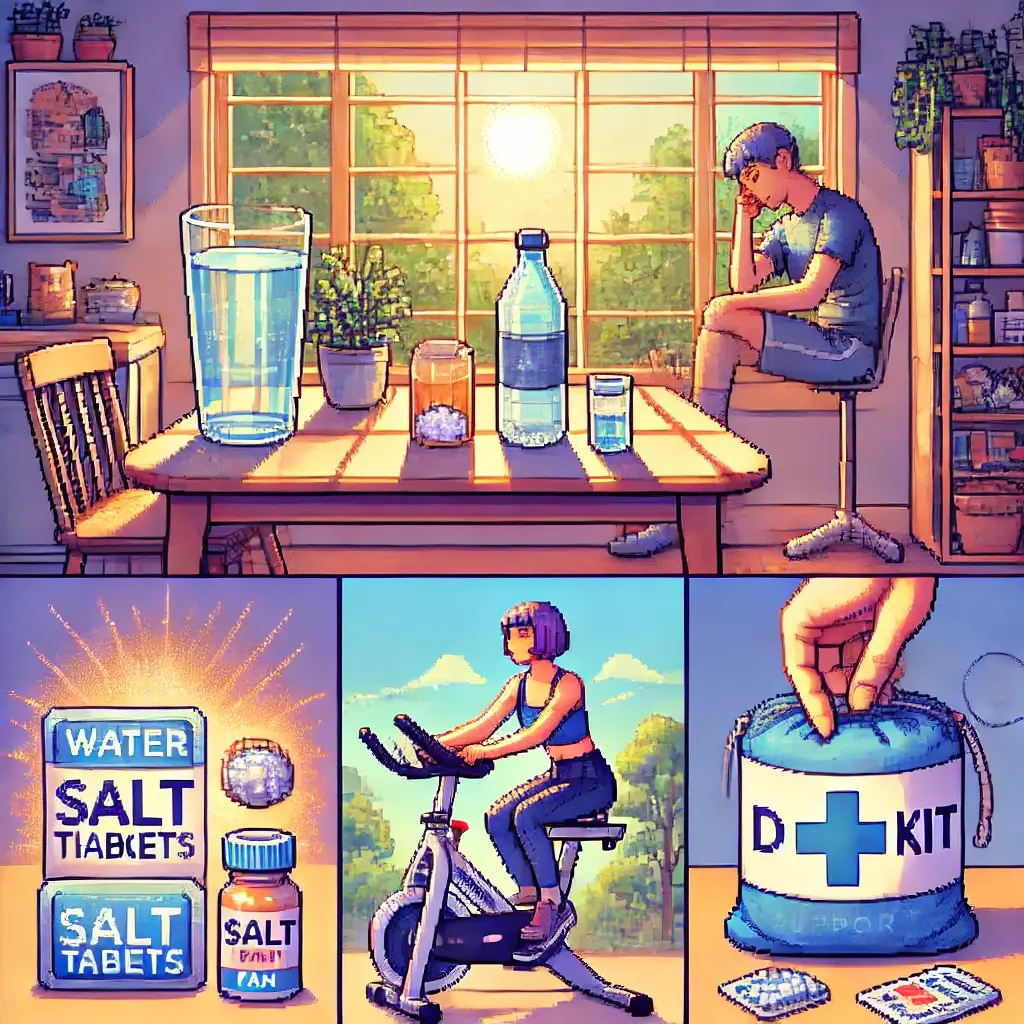
5 Life-Altering Secrets for Managing Dysautonomia
Hey there, fellow traveler on the wild road of chronic illness.
If you’re reading this, chances are you’ve been on a journey that feels a lot like trying to navigate a ship in a storm with a compass that’s completely lost its mind.
That’s dysautonomia for you.
It’s a tricky beast, isn’t it?
One minute you’re feeling okay, the next you’re convinced you’re about to pass out just from standing up too fast to grab a glass of water.
For a long time, I felt like I was losing a silent battle against my own body.
I was constantly tired, dizzy, and just… unwell.
Doctors would run all the standard tests and tell me everything was “normal,” which, as you know, is the most infuriating thing to hear when you feel anything but.
It can feel so incredibly isolating.
You start to doubt yourself, wondering if it’s all in your head.
But let me tell you, it’s not in your head.
What you’re experiencing is real, and you are not alone.
My hope with this post is to give you some of the things I wish I’d known when I was first diagnosed with **Postural Orthostatic Tachycardia Syndrome (POTS)**, one of the most common forms of dysautonomia.
I’ve learned a few powerful **dysautonomia** management secrets over the years that have truly changed my life.
I went from just surviving to actually living.
This isn’t just another dry medical article.
It’s a guide from someone who gets it, who has been in the trenches and found a way to not just cope, but to thrive.
Let’s dive in and start taking back control.
Table of Contents
What the Heck Is Dysautonomia Anyway? Your Body’s Weirdo Thermostat
Imagine your body is a perfectly functioning smart home.
The lights turn on when you enter a room, the thermostat adjusts the temperature automatically, and the security system alerts you if there’s a problem.
Now, imagine all those systems start short-circuiting.
The lights flicker on and off for no reason, the thermostat cranks the heat in the middle of summer, and the security alarm blares at a gentle breeze.
That, my friends, is a pretty good metaphor for dysautonomia.
In simple terms, dysautonomia is a malfunction of the **Autonomic Nervous System (ANS)**.
The ANS is the part of your nervous system that controls all the automatic, unconscious functions of your body.
I’m talking about things like your heart rate, blood pressure, digestion, breathing, body temperature, and even your fight-or-flight response.
It’s the silent CEO of your body, and when it goes on strike, everything gets a little… weird.
For me, it started with dizziness upon standing, and then it snowballed into a constant state of fatigue, brain fog, and an unpredictable heart rate that would spike every time I got up.
The good news is that understanding what’s going on under the hood is the first big step toward finding a solution.
It’s not just a feeling; it’s a real physiological issue that needs specific attention.
It’s important to understand the different flavors of dysautonomia.
You have **POTS**, which is characterized by an abnormal increase in heart rate upon standing.
Then you have **Neurocardiogenic Syncope (NCS)**, where you get a sudden drop in blood pressure that can lead to fainting.
There are many others, but these are the most common.
While the specifics might differ, many of the management strategies overlap, which is a huge relief.
So, let’s stop feeling like we’re just floating aimlessly and start building a real strategy.
Secret #1: The Power of Salt and Water — Seriously, It’s a Game-Changer
I can’t stress this enough.
If you take away nothing else from this post, remember this: **salt is your friend, and water is your lifeline.**
When I first heard this, I thought my doctor was crazy.
All my life, I’d been told to limit my salt intake.
It was a complete reversal of everything I’d ever learned about health.
But here’s the science behind it.
Many people with dysautonomia, especially POTS, have a reduced blood volume.
Imagine your circulatory system is like a balloon.
If the balloon is only half-full of air, it’s floppy and doesn’t hold its shape very well.
Your body has to work overtime to keep it inflated.
But if you fill that balloon up, it becomes firm and stable.
Salt helps your body retain water, which in turn increases your blood volume.
This means there’s more blood to go around, and your heart doesn’t have to beat so fast just to get blood to your brain when you stand up.
It’s a simple, elegant solution to one of the core problems.
So how do you do this?
It’s not about just adding a little more salt to your food.
I’m talking about a significant, intentional increase.
Many doctors recommend anywhere from 5 to 10 grams of sodium a day.
This is a big number, and it might feel strange at first.
I remember feeling like I was going to turn into a pickle.
The best way to do this is to get a doctor’s recommendation first, of course, but then to start experimenting.
I find that mixing electrolyte powders or tablets into my water works wonders.
I also eat salty snacks, like pickles, olives, or broth, throughout the day.
And let’s not forget the water.
You need to drink a *lot* of it to go along with all that salt.
Aim for at least 2-3 liters a day, but again, listen to your body and your doctor.
For me, a good morning routine looks like this: I wake up, immediately drink a huge glass of water with an electrolyte tablet, and then have a salty breakfast.
This sets the tone for the entire day and makes a noticeable difference in my energy levels and dizziness.
It’s a simple change, but it’s the foundation upon which everything else is built.
I promise you, it’s worth it.
Secret #2: Exercise That Won’t Knock You Out
Raise your hand if you’ve been told to “just exercise more” by a well-meaning but completely clueless person.
I see you.
It’s the absolute worst advice because for someone with dysautonomia, a standard workout can feel like you’ve just run a marathon.
The dizziness, the fatigue, the post-exertional malaise… it’s a real thing, and it can be terrifying.
But here’s the secret: you absolutely can and should exercise, but you have to do it differently.
The key here is **recumbent exercise.**
This means exercising while you’re either sitting or lying down.
When you’re upright, gravity is your worst enemy, pulling blood down to your legs and making your heart work overtime.
By staying horizontal, you take gravity out of the equation and allow your body to build cardiovascular strength without the punishing upright challenge.
So, what does this look like in practice?
I love using a recumbent bike or a rowing machine.
Swimming is also fantastic because the water provides gentle compression and support.
Even simple exercises like leg raises or crunches while lying on a yoga mat can be a great place to start.
The goal is to build your core and leg muscle strength, which helps your body pump blood back up to your heart more efficiently.
It’s like giving your circulatory system a little extra push.
I remember the first time I tried a recumbent bike.
I was so nervous, thinking I would crash and burn just like every other exercise attempt.
But I started slow, just 5 minutes a day, and gradually built my way up.
It was a slow process, but over time, I noticed a huge difference.
I was able to stand longer without feeling like my legs were filled with lead, and my daily fatigue improved dramatically.
The secret here isn’t to push yourself to exhaustion.
It’s to be consistent, gentle, and smart about how you move your body.
Don’t compare your workout to anyone else’s.
Just focus on what feels good for you, and celebrate every small victory.
That 5-minute ride on the recumbent bike is a huge win, and it’s a step toward a stronger, more stable you.
Secret #3: The Unsung Hero of Healing — Mindful Breathing
When your autonomic nervous system is on the fritz, your body can get stuck in a constant state of “fight-or-flight.”
This is your sympathetic nervous system running the show, pumping out adrenaline, and keeping you on high alert.
It’s why you might feel anxious, jittery, or have a racing heart for no apparent reason.
The antidote to this is your parasympathetic nervous system, also known as the “rest and digest” system.
And one of the most powerful ways to activate it is through your breath.
I know, I know.
It sounds a little woo-woo, but trust me, this is backed by science and has made a monumental difference in my life.
Just a few minutes of mindful breathing can help calm your nervous system, lower your heart rate, and bring you back to a state of calm.
The simplest technique I’ve found is **diaphragmatic breathing**, also known as belly breathing.
You can do this anywhere, anytime.
Just lie down or sit comfortably.
Place one hand on your chest and the other on your belly.
Breathe in slowly through your nose, letting your belly expand like a balloon.
You should feel the hand on your belly rise, while the hand on your chest remains still.
Then, exhale slowly and completely through your mouth, letting your belly fall.
Repeat this for 5-10 minutes.
It sounds so simple, but the effect is profound.
It’s like giving your nervous system a gentle reset button.
I use this whenever I feel a POTS flare coming on, or when my anxiety starts to creep up.
It’s a tool that gives you immediate control when it feels like everything is out of your hands.
Another thing that falls into this category is prioritizing sleep.
Sleep is when your body does its most important work of healing and repairing.
For us, a good night’s sleep isn’t a luxury; it’s a necessity.
Practice good sleep hygiene: keep your room dark and cool, avoid screens before bed, and stick to a consistent sleep schedule.
You can’t pour from an empty cup, and for those of us with **dysautonomia**, our cups are often half-full to begin with.
Taking the time for these simple, intentional practices is not a weakness—it’s a strength.
It’s how you build resilience against the unpredictable nature of this condition.
Secret #4: A Hug for Your Legs — Why Compression is Everything
If you’re not already using compression gear, this is the next thing on your to-do list.
For me, it was a total game-changer.
The idea is simple: compression garments help prevent blood from pooling in your legs and feet.
Remember that half-full balloon analogy?
Compression socks and abdominal binders act like a gentle, constant hug for your blood vessels.
They squeeze everything just enough to help push blood back up toward your heart and brain.
This means your heart doesn’t have to work as hard, and you get less of that lightheaded, dizzy feeling when you stand up.
When I first started wearing them, I felt an almost immediate difference.
The feeling of being shaky and on the verge of fainting was replaced with a sense of stability.
It was like a magic trick.
You can find compression socks at most pharmacies or medical supply stores, but make sure you get the right strength.
For most people with dysautonomia, a medical-grade compression of 20-30 mmHg is a good starting point.
I even wear an abdominal binder sometimes, which helps with a lot of my upper body symptoms too.
The key is to put them on in the morning before you get out of bed.
This prevents the blood from pooling in the first place.
It’s not the most fashionable look, I’ll admit.
I’ve learned to rock the compression socks with pride.
After all, what’s a little fashion faux pas compared to not feeling like you’re going to faint?
This is a tool that gives you back a little piece of your independence, and that’s worth more than any trendy outfit.
Think of them as your personal, invisible support system that you can wear all day long.
They are a non-negotiable part of my daily routine, and I can’t imagine living without them now.
Secret #5: Your Own Personal “Bad Day” Survival Kit
Living with a chronic illness is a lot like being a scout: you have to be prepared for anything.
I learned this the hard way after one too many trips where I found myself in a bad flare-up with no resources.
Now, I don’t leave the house without my “dysautonomia kit.”
This is a small bag or pouch that contains everything I might need to manage my symptoms on the go.
It’s a proactive measure that gives me so much peace of mind.
So, what goes in it?
For me, it’s a small bottle of water, a few single-serving electrolyte packets, a salty snack like jerky or crackers, and my rescue meds if I have them.
I also keep a few salt tablets in there, just in case.
It’s also a good idea to have a card in your wallet that explains your condition in case of an emergency.
I also keep a pair of emergency compression socks in my kit, just in case I need them.
The beauty of this kit is that it’s completely personalized to you and your needs.
Maybe you need a small fan to help with temperature regulation, or a bottle of peppermint oil to help with nausea.
The contents aren’t as important as the concept itself.
The point is to give yourself a safety net.
This isn’t about being paranoid; it’s about being empowered.
You can go about your day knowing you have the tools to manage your symptoms if they decide to flare up.
It allows you to live your life more freely, without the constant fear of being caught off guard.
You’re not a victim of your illness; you’re a proactive manager, and this little kit is a symbol of that power.
Putting It All Together: Your Personalized Action Plan
You’ve got a lot of information now, so let’s tie it all together into a practical, actionable plan.
Remember, this isn’t a one-size-fits-all solution.
You have to be a detective for your own body, paying attention to what works and what doesn’t.
Start with the basics: **hydration and electrolytes.**
Make a conscious effort to increase your fluid and salt intake and see how you feel after a week.
Next, try incorporating **recumbent exercise** into your routine.
Just 5 minutes a day is a great start.
Then, find a moment each day to practice **mindful breathing** to help calm your nervous system.
Finally, consider investing in a pair of **compression socks** and building your own **”bad day” survival kit.**
This is a marathon, not a sprint.
There will be good days and bad days, and that’s okay.
The goal isn’t to be “cured” overnight, but to find a way to live a full and meaningful life *with* your condition.
You are the expert on your own body.
Listen to it, be kind to it, and advocate for it.
You’re already so strong for just getting this far.
Keep going.
Final Thoughts and Finding Your Community
Living with a chronic illness can be an incredibly lonely experience.
People don’t understand, and it’s hard to explain a condition that’s invisible to the naked eye.
But please know this: **you are not alone.**
There is a vibrant and supportive community of people who understand exactly what you’re going through.
Finding a support group, whether online or in person, can be one of the most powerful tools in your arsenal.
It’s where you can share your struggles, celebrate your wins, and learn from others who have been on this journey longer than you.
It’s where you can be yourself without having to constantly explain your reality.
You’ll find that many of these management tips and secrets are things that have been shared and refined by the community itself.
I want to empower you with some resources to get started on this path.
Below are some of the most reliable and helpful organizations I’ve found in my own journey.
They are filled with valuable information and a sense of community that is priceless.
Remember to always consult with a healthcare professional before making any significant changes to your medical care or lifestyle.
These resources are for information and support, not a substitute for medical advice.
You have the power to take control of your health and your life.
It won’t always be easy, but with the right tools and a strong support system, you can find a way to live well.
You’ve got this.Visit Dysautonomia InternationalLearn More at Cleveland ClinicExplore POTS at Mayo Clinic
Dysautonomia, POTS, Autonomic Nervous System, Chronic Illness, Lifestyle Management