
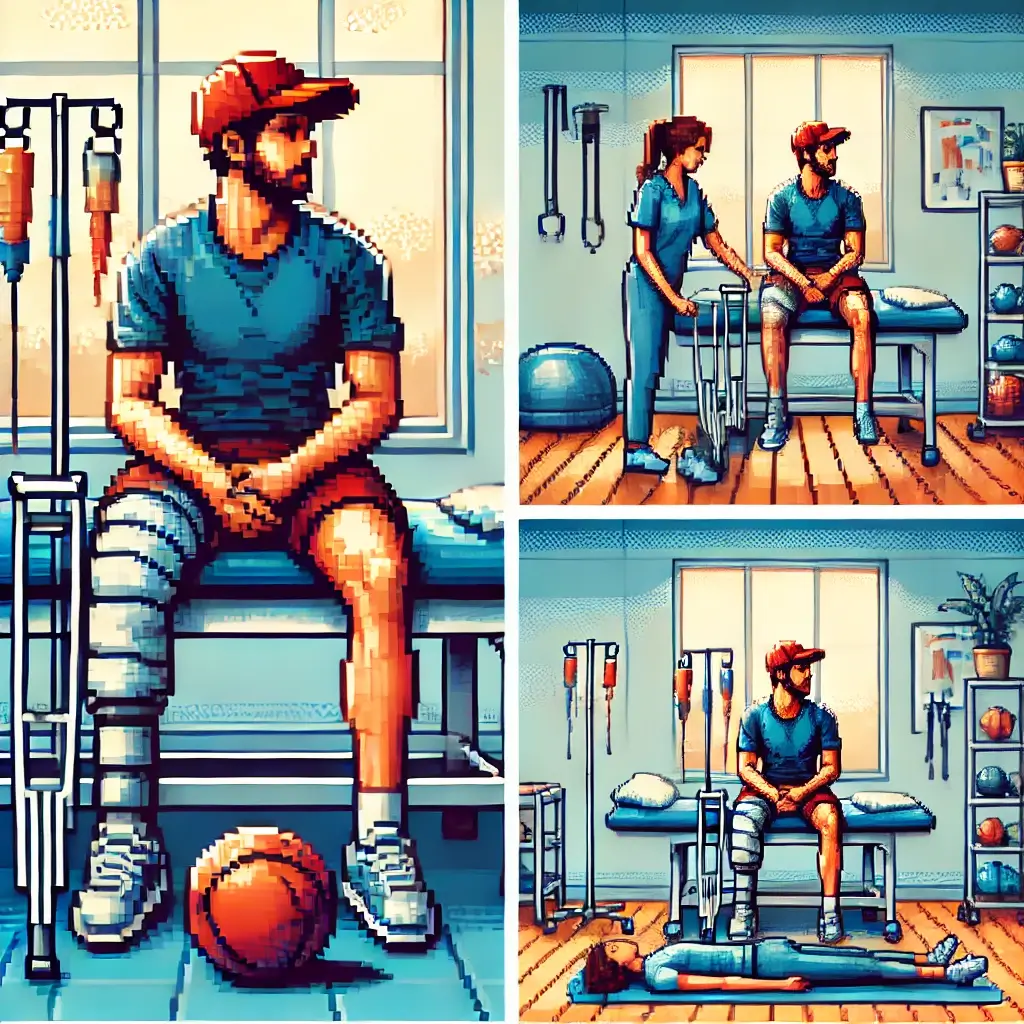
3 Unbelievable Steps to Conquer ACL Recovery & Sports Injuries!
Hey there, fellow athletes and weekend warriors!
Ever found yourself sidelined by an injury, staring at your beloved sport from the stands, feeling like your world just got a little less colorful?
Trust me, I’ve been there, limping around, feeling like a rusty tin man.
It’s not just the physical pain, is it?
It’s the frustration, the fear of not getting back to your peak, the thought of missing out on those thrilling moments.
Whether you’ve torn your ACL, strained a hamstring, or are battling some persistent shoulder pain, the road to recovery can seem long and daunting.
But here’s the good news: it doesn’t have to be a lonely, confusing journey.
In fact, with the right approach and a sprinkle of grit, you can come back stronger, faster, and more resilient than ever before.
This isn’t just about getting back to normal; it’s about upgrading your body’s operating system.
Today, we’re diving deep into the world of **ACL recovery** and other common sports injuries, laying out a clear, actionable roadmap for your rehabilitation.
We’ll talk about the crucial steps, the exercises that truly make a difference, and how to maintain that mental edge when the going gets tough.
Forget the stale, generic advice; we’re going to get real, with practical tips and a dose of humor to keep you motivated.
Let’s unlock the secrets to not just recovering, but truly thriving after an injury.
Ready to reclaim your game?
Let’s jump in!
Table of Contents
Understanding the Beast: What Exactly Happened?
Before we dive into the nitty-gritty of rehabilitation, let’s take a moment to understand what we’re up against.
Think of it like this: you wouldn’t try to fix a leaky faucet without knowing where the leak is, right?
Similarly, understanding your specific injury is the first, crucial step.
While we’re focusing on **ACL recovery**, many principles apply across the board.
The Anterior Cruciate Ligament (ACL) is one of the four major ligaments in your knee, and it’s a real workhorse.
It connects your thigh bone (femur) to your shin bone (tibia) and is vital for stability, especially during cutting, pivoting, and jumping movements – basically, all the fun stuff in sports.
When it tears, it’s often an audible “pop” followed by a rather unpleasant feeling of instability.
Other common sports injuries include hamstring strains (that sudden sharp pain in the back of your thigh), ankle sprains (classic misstep gone wrong), rotator cuff tears (ouch, my shoulder!), and various tendinopathies (those nagging pains that just won’t quit).
Each injury has its own unique recovery timeline and specific rehab needs.
That’s why a proper diagnosis from a medical professional is non-negotiable.
Don’t try to play doctor yourself; leave that to the pros.
They’ll help you understand the extent of the damage, whether surgery is needed (often the case for a full ACL tear if you want to return to high-level sports), and what the immediate next steps should be.
This initial understanding sets the stage for a targeted and effective rehabilitation plan, preventing you from doing too much too soon, or too little too late.
The Golden Rule of Recovery: Patience (and a Little Bit of Science)
If there’s one thing I could tattoo on every injured athlete’s forehead, it would be “Patience is your superpower.”
Seriously, I know it’s frustrating.
You see your teammates playing, you hear the roar of the crowd, and you just want to fast-forward through the pain.
But rushing your **ACL recovery** or any other injury rehab is a one-way ticket to re-injury, which means going back to square one.
And trust me, nobody wants that reruns are for Netflix, not your injury.
Rehabilitation isn’t about how fast you can do something; it’s about how well you can do it.
It’s about letting your body heal naturally while strategically strengthening the surrounding muscles and tissues.
The science behind it is fascinating: your body is an incredible healing machine, but it needs the right environment and the right stimuli.
Think of your body like a fancy sports car after a crash.
You wouldn’t just patch it up with duct tape and hit the race track, right?
You’d take it to a skilled mechanic, replace the damaged parts, realign the chassis, and meticulously test every system before it sees the asphalt again.
Your body deserves the same meticulous attention.
This means respecting the healing phases, listening to your body (it sends signals for a reason!), and sticking to your physical therapist’s plan like glue.
Don’t compare your progress to others.
Everyone’s body is different, and every injury is unique.
Your journey is *your* journey, and it’s okay if it takes a little longer than your buddy’s.
Focus on consistent, quality work, and the results will follow.
Phase 1: The Immediate Aftermath – RICE & Gentle Movement
Alright, let’s get down to business.
Phase 1 typically kicks off right after the injury (or surgery for an ACL tear) and focuses on managing pain, swelling, and restoring initial range of motion.
This is where the classic **RICE** protocol comes into play:
Rest: Give your injured area a break. For an ACL, this might mean crutches and limiting weight-bearing. For an ankle sprain, keeping weight off it for a few days is key.
Ice: This is your best friend for reducing swelling and numbing pain. Apply ice packs for 15-20 minutes every 2-3 hours, especially in the first 48-72 hours.
Compression: Use an elastic bandage to provide gentle compression around the injured area. This helps to minimize swelling, but don’t wrap it too tightly; you don’t want to cut off circulation.
Elevation: Keep the injured limb elevated above your heart as much as possible. This uses gravity to help drain excess fluid away from the injury site.
Beyond RICE, early, gentle movement is often encouraged to prevent stiffness and promote circulation.
For ACL recovery, this usually means straight leg raises (lying down and lifting your leg while keeping it straight), ankle pumps (flexing and pointing your foot), and gentle knee bends (heel slides).
The goal here isn’t to build strength, but to maintain mobility and prevent muscle atrophy as much as possible.
Your physical therapist will guide you on the appropriate movements and how much is too much.
Listen to them! They’re like your personal injury navigators.
This phase is all about setting a solid foundation.
Think of it as preparing the ground before you start building your dream house.
You need to clear the debris (swelling), lay a stable base (pain reduction), and ensure the plumbing works (initial range of motion).
Don’t skip these steps, no matter how eager you are to jump into more challenging exercises.
Phase 2: Rebuilding the Foundation – Strengthening & Stability
Once pain and swelling are under control, and you’ve regained a good initial range of motion, it’s time for the real muscle-building to begin!
Phase 2 is all about progressively strengthening the muscles around the injured joint and improving its stability.
For **ACL recovery**, this is a critical period where you focus on regaining quadriceps strength (often significantly weakened after surgery), hamstring strength (crucial for protecting the new ACL), and glute activation.
Here are some common exercises you might encounter in this phase:
1. Quadriceps Strengthening:
Quad Sets: Lie on your back, push the back of your knee into the bed, and tighten your thigh muscle. Hold for 5-10 seconds. Simple but effective!
Straight Leg Raises (with ankle weights): As mentioned, but now you might add light ankle weights as you get stronger.
Mini Squats: Gradually progress to partial squats, focusing on proper form. Start with wall slides to ensure your knees don’t go past your toes.
Leg Presses: Under supervision, machine leg presses can be introduced with light weight and a controlled range of motion.
2. Hamstring Strengthening:
Hamstring Curls (prone or standing): Using resistance bands or a machine, curl your heel towards your glutes.
Glute Bridges: Lie on your back with knees bent, feet flat. Lift your hips off the ground, squeezing your glutes. This also works your glutes and lower back.
3. Glute & Hip Strengthening:
Clamshells: Lie on your side with knees bent and stacked. Keep your feet together and open your top knee like a clam shell.
Side-Lying Leg Lifts: Lie on your side and lift your top leg straight up.
4. Balance and Proprioception:
Single Leg Balance: Start on a stable surface, then progress to an unstable surface like a wobble board or cushion. This is crucial for retraining your body’s awareness of its position in space.
Heel-to-Toe Walks: Walking with your heel directly in front of your toes can improve balance and coordination.
Your physical therapist will guide you through the appropriate resistance, repetitions, and sets for each exercise.
Progression is key here; you want to continually challenge your muscles without overdoing it.
Think of it as laying bricks for a house.
Each brick (exercise) adds to the strength and stability of the overall structure.
You wouldn’t rush to put the roof on before the walls are sturdy, would you?
This phase can be lengthy, especially for **ACL recovery**, often lasting several months.
Consistency is paramount.
Even on days when you don’t feel like it, showing up and putting in the work will pay dividends in the long run.
And remember, pain is a signal.
If something hurts in a sharp, non-muscle-soreness way, back off and talk to your therapist.
Phase 3: Return to Play – Agility, Power & Prevention
This is the phase everyone looks forward to – the light at the end of the tunnel!
Phase 3 focuses on sport-specific drills, power development, and preparing your body for the demands of your chosen activity.
It’s about getting your body not just strong, but smart and reactive.
For **ACL recovery**, this means gradually reintroducing activities that involve cutting, jumping, and pivoting.
It’s not enough to be able to lift weights; you need to be able to react instantaneously, absorb impact, and change direction safely.
Here’s a glimpse of what this phase might involve:
1. Agility Drills:
Cone Drills: Start with simple forward and backward movements, then progress to side shuffles, figure eights, and zig-zags.
Ladder Drills: Using an agility ladder, practice quick footwork patterns.
Plyometrics (Jump Training): Begin with low-impact jumps (e.g., box jumps onto a low box) and gradually increase height and complexity (e.g., single-leg hops, bounding).
2. Sport-Specific Training:
Running Progression: Start with light jogging, gradually increasing speed and distance. Progress to sprints and interval training.
Ball Drills: If you play soccer, incorporate light kicking and dribbling. For basketball, gentle shooting and passing.
Controlled Scrimmages: Under supervision, slowly introduce yourself back into non-contact or limited-contact drills with your team.
3. Advanced Strength & Conditioning:
Continue with heavy compound lifts like squats and deadlifts (if cleared by your therapist).
Incorporate rotational exercises to mimic sport movements.
Focus on eccentric strengthening (the lowering phase of a movement), which is crucial for injury prevention.
This phase is where the rubber meets the road, so to speak.
It’s about testing your newly rebuilt body in a controlled environment before throwing yourself back into the competitive fray.
The transition back to full sport participation should be gradual and carefully monitored by your physical therapist and coach.
They’ll use objective criteria, like strength tests, hop tests, and functional movement assessments, to determine when you’re truly ready.
Don’t be tempted to rush this part; it’s the final polish before you shine again.
Remember, your goal isn’t just to return to play, but to return *better* than before.
This means not just physical readiness, but also mental preparedness and confidence.
Nutrition: The Unsung Hero of Recovery
You wouldn’t build a skyscraper without quality materials, right?
Well, your body is your skyscraper, and what you put into it directly impacts its ability to heal and rebuild.
Nutrition often gets overlooked in the excitement of exercises and milestones, but it plays a massive role in **ACL recovery** and any other injury healing process.
Think of food as your body’s construction crew.
You need to provide them with the right tools and resources to do their job efficiently.
Here’s a quick rundown of what your body craves during recovery:
Protein: This is non-negotiable. Protein is the building block for muscle repair and growth. Aim for lean sources like chicken, fish, eggs, lean beef, legumes, and protein supplements if needed. Think about hitting 1.6-2.2 grams of protein per kilogram of body weight, especially in the early phases.
Healthy Fats: Omega-3 fatty acids (found in fish, flaxseeds, walnuts) are anti-inflammatory powerhouses. They help reduce the swelling that can hinder recovery.
Complex Carbohydrates: These provide the energy your body needs for healing and exercise. Whole grains, fruits, and vegetables are your friends here. Don’t go low-carb during rehab; your body needs fuel!
Vitamins and Minerals: Vitamin C (collagen synthesis), Zinc (immune function, tissue repair), Vitamin D and Calcium (bone health, crucial if you’ve had a bone graft for ACL), and Magnesium (muscle function, recovery) are just a few stars. A balanced diet rich in fruits and vegetables will typically provide these.
Hydration: Water, water, everywhere! Staying well-hydrated is essential for nutrient transport, waste removal, and overall cellular function.
Avoid processed foods, excessive sugar, and inflammatory oils, which can hinder your body’s healing process.
Eating well isn’t just about feeling good; it’s about providing your body with the optimal environment to repair and rebuild.
Consider consulting a sports nutritionist if you want a truly tailored plan, especially for a significant injury like an ACL tear.
They can help you dial in your diet for maximum recovery benefits.
The Mental Game: Staying Sane (and Positive) During Recovery
Let’s be real: physical recovery is only half the battle.
The mental game, especially during a lengthy **ACL recovery**, can be just as, if not more, challenging.
There will be good days, and then there will be days when you want to throw your crutches across the room and scream into a pillow.
That’s completely normal.
Acknowledging these feelings is the first step.
Here are some strategies to keep your head in the game:
Set Small, Achievable Goals: Instead of focusing on the finish line (returning to sport), celebrate every small victory. Being able to walk without crutches, hitting a certain flexion angle, or completing a full set of exercises – these are all wins!
Stay Connected: Don’t isolate yourself. Lean on your support system: family, friends, teammates, and your physical therapist. Talk about your frustrations, and let them lift you up.
Visualize Success: Spend time visualizing yourself performing your sport, making that incredible play, feeling strong and confident. This can activate neural pathways and keep you motivated.
Find New Hobbies/Distractions: If you can’t play your sport, find other things to occupy your mind. Read books, learn a new skill, watch movies, or dive into a creative project. This prevents your entire identity from revolving around your injury.
Educate Yourself: The more you understand your injury and the recovery process, the less scary and mysterious it becomes. Knowledge is power, and it gives you a sense of control.
Be Patient with Yourself (Again!): There will be setbacks. You might have a day where your knee swells up, or an exercise feels harder than it should. Don’t beat yourself up. It’s part of the process. Acknowledge it, adjust, and keep moving forward.
Seek Professional Mental Support: If you find yourself struggling with persistent sadness, anxiety, or depression, don’t hesitate to talk to a sports psychologist or counselor. They are trained to help athletes navigate the emotional rollercoaster of injury recovery.
Your mindset is a powerful tool.
Cultivate optimism, resilience, and a belief in your body’s ability to heal.
Remember, an injury is a temporary setback, not a career-ender.
Beyond ACL: Other Common Injuries & Their Rehab Nuances
While **ACL recovery** is a beast of its own, many principles discussed apply to other common sports injuries, with some specific nuances.
Let’s touch upon a few:
1. Hamstring Strains:
Often caused by sudden acceleration or overstretching.
Rehab focuses on gentle stretching, eccentric strengthening (e.g., Nordic hamstring curls), and gradually increasing running speed.
Crucially, preventing recurrence involves addressing muscle imbalances and ensuring proper warm-up.
2. Ankle Sprains:
Very common, especially lateral sprains (rolling your ankle outwards).
RICE is paramount initially. Then, focus on restoring range of motion (alphabet tracing with your foot), strengthening surrounding muscles (calf raises, resistance band exercises), and balance training (single-leg stance, wobble board).
Proprioception is key here to prevent chronic instability.
3. Rotator Cuff Injuries (Shoulder):
Can range from tendinitis to full tears, often seen in throwing or overhead athletes.
Rehab emphasizes scapular stability (shoulder blade control), rotator cuff strengthening (internal/external rotations with light resistance), and posture correction.
Gradual return to overhead movements is vital.
4. Patellofemoral Pain Syndrome (Runner’s Knee):
Pain around the kneecap, often due to muscle imbalances (weak glutes, tight quads) or improper running mechanics.
Rehab involves strengthening glutes, quads, and hips, stretching tight muscles, and analyzing movement patterns.
It’s all about getting that kneecap tracking smoothly!
While the specific exercises might differ, the foundational principles remain the same: reduce pain/swelling, restore range of motion, strengthen supporting muscles, improve balance/proprioception, and gradually return to sport-specific activities.
Always seek a professional diagnosis and follow a tailored rehab program for your specific injury.
When to Seek Professional Help (and Why It’s Crucial)
I know, I know, sometimes we all think we’re invincible or that a little rest will fix everything.
But when it comes to sports injuries, especially something as significant as an **ACL tear**, playing doctor or relying solely on YouTube videos just won’t cut it.
There are several key professionals who can be invaluable allies in your recovery journey:
Orthopedic Surgeon: For major injuries like ACL tears, meniscal tears, or severe fractures, an orthopedic surgeon will be your first stop. They diagnose the injury, determine if surgery is necessary, and perform the procedure if needed. They’ll also provide the initial post-operative guidelines.
Physical Therapist (PT): This is your absolute MVP for rehabilitation. A good PT will assess your injury, create a personalized exercise program, teach you proper form, monitor your progress, and guide you safely through each phase of recovery. They are experts in movement and function.
Sports Medicine Doctor: These doctors specialize in non-surgical management of sports injuries, concussions, and other athletic health issues. They can provide accurate diagnoses, administer injections if necessary, and coordinate your care with other specialists.
Certified Athletic Trainer (ATC): Often found in high schools, colleges, and professional sports teams, ATCs provide immediate care for injuries, assist with rehab, and help with injury prevention strategies on the field or court.
Sports Psychologist: As we discussed, the mental game is huge. A sports psychologist can help you cope with the emotional impact of injury, manage fear of re-injury, and maintain motivation.
Why is professional help so crucial?
Because every injury is unique, and what works for one person might not work for another.
Professionals provide a tailored, evidence-based approach, ensuring you don’t miss critical steps or push too hard too soon (or not hard enough!).
They have the knowledge and experience to identify potential pitfalls, address underlying biomechanical issues, and truly optimize your chances of a full and safe return to sport.
Don’t view it as a weakness to ask for help; view it as a smart, strategic move to get back to what you love faster and safer.
Think of them as your pit crew, fine-tuning your machine after a rough race.
Here are some fantastic, trustworthy resources to explore:
Learn More About ACL Rehab from Physical Therapists
Understand General Sports Injury Recovery
Discover Sports Injury Prevention Strategies
These are great starting points for reliable, expert-backed information.
Your Long-Term Playbook: Injury Prevention & Continued Performance
Congratulations, you’ve battled through rehab, conquered your **ACL recovery**, and are back on the field, court, or track!
But the journey doesn’t end here.
In fact, returning to sport is just the beginning of your long-term playbook for continued performance and, crucially, injury prevention.
Think of your body after an injury like a finely tuned instrument that’s been repaired.
It needs continuous maintenance and care to perform at its best and prevent future breakdowns.
Here’s how you can stay ahead of the game:
Continue Your Strength & Conditioning: Don’t abandon your rehab exercises just because you’re back playing. Incorporate them into your regular training routine. Strengthening your hamstrings, glutes, and core is essential for protecting your knees (and the rest of your body).
Focus on Neuromuscular Control: Keep up with balance and proprioception drills. These help your brain and muscles communicate effectively, improving your reaction time and reducing the risk of awkward movements that lead to injury.
Warm-Up Properly: A dynamic warm-up that includes light cardio, stretching, and sport-specific movements prepares your muscles and joints for activity. No more just jumping straight into it!
Cool-Down and Stretch: After exercise, a proper cool-down and static stretching can help improve flexibility and reduce muscle soreness.
Listen to Your Body: This is perhaps the most important lesson. Pay attention to nagging pains, unusual stiffness, or persistent fatigue. Don’t push through pain; it’s your body’s way of telling you something is wrong. Rest, adjust your training, or seek advice if needed.
Vary Your Training: Don’t always do the same thing. Cross-training (e.g., swimming, cycling, yoga) can help develop different muscle groups, improve overall fitness, and reduce the repetitive stress that can lead to overuse injuries.
Get Adequate Rest and Sleep: Your body repairs itself during sleep. Prioritize 7-9 hours of quality sleep per night. It’s not a luxury; it’s a necessity for recovery and performance.
Stay Hydrated and Nourished: Continue applying the nutrition principles we discussed. Fueling your body correctly supports sustained energy, muscle function, and overall health.
Regular Check-ups: Consider periodic check-ups with your physical therapist or sports medicine doctor, especially if you have a history of significant injury. They can identify potential issues before they become major problems.
Recovering from a sports injury, especially something like an ACL tear, is a journey of resilience, patience, and dedication.
It tests you physically and mentally, but it also offers an incredible opportunity for growth.
You emerge not just with a stronger body, but with a deeper understanding of its mechanics, and a renewed appreciation for the joy of movement.
So, lace up your shoes, hydrate, and approach your comeback with confidence.
You’ve got this!
Remember, the game isn’t over; you’re just on a power-up break.
Now go out there and show the world what you’re made of!
ACL recovery, sports injury, rehabilitation, physical therapy, strength training