
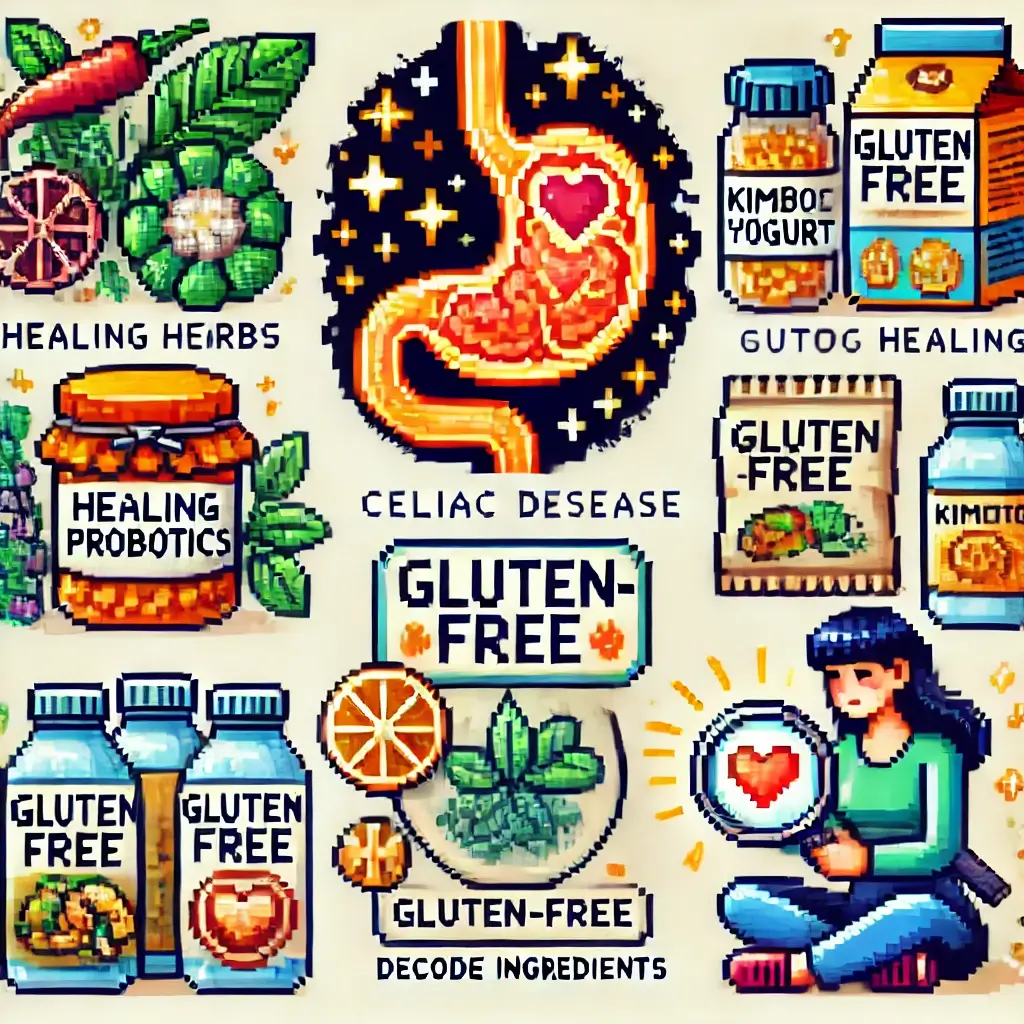
7 Groundbreaking Strategies: Master Celiac & Conquer Gluten-Free Living!
Hey there, fellow food adventurers!
If you’re reading this, chances are you or someone you love is navigating the often-tricky waters of celiac disease and gluten-free living.
And let me tell you, I get it.
It’s not just about cutting out bread and pasta; it’s a complete paradigm shift in how you view food, health, and even social interactions.
But here’s the kicker: it doesn’t have to be a life sentence of deprivation.
In fact, with the right knowledge and a dash of resilience, it can be a pathway to unparalleled health and vitality.
I’ve walked this path myself, stumbled a few times (who hasn’t accidentally eaten something with hidden gluten and paid the price?), and emerged with a trove of insights.
Think of me as your seasoned guide, here to share not just the “what to do,” but the “how to thrive” when it comes to celiac and advanced gluten-free nutrition.
Forget everything you thought you knew about bland, restrictive diets.
We’re about to dive deep into **7 groundbreaking strategies** that will empower you to not just survive, but truly flourish.
Ready to reclaim your plate and your health?
Let’s do this! —
Table of Contents
—
1. Beyond the Basics: Why “Gluten-Free” Isn’t Always “Healthy”
Okay, let’s get something straight right off the bat.
When you’re first diagnosed with celiac, the immediate focus is, rightly so, on eliminating gluten.
Suddenly, “gluten-free” becomes your mantra.
And for a while, just sticking to that seems like a monumental achievement (which it absolutely is!).
But here’s where the plot thickens: just because something is labeled “gluten-free” doesn’t automatically make it a health food.
I’ve seen it countless times – people swap out their regular bread for a gluten-free loaf, their pasta for a GF version, and their cookies for GF cookies, thinking they’ve got it all figured out.
But many of these processed gluten-free alternatives are, frankly, nutritional nightmares.
They’re often loaded with refined starches like rice flour, cornstarch, and tapioca starch, which can spike your blood sugar faster than a rollercoaster.
They’re low in fiber, stripped of essential vitamins and minerals, and often packed with unhealthy fats and sugars to compensate for the lack of gluten’s texture and flavor.
It’s like replacing one empty calorie with another, just a different kind of empty.
Think about it: if you’re eating gluten-free crackers made from white rice flour, you’re not doing your body many favors.
We need to shift our focus from merely “gluten-free” to “naturally gluten-free and nutrient-dense.”
This means embracing whole, unprocessed foods that are naturally free of gluten.
We’re talking about vibrant fruits and vegetables, lean proteins, healthy fats, and naturally gluten-free grains in their whole form.
Imagine a plate bursting with color: a grilled salmon fillet, a mountain of roasted broccoli and sweet potatoes, and a fresh berry salad.
Now *that’s* a gluten-free meal that nourishes every cell in your body.
It’s about making conscious choices that fuel your body, rather than just avoiding what harms it.
This foundational shift is crucial for long-term health, not just symptom management. —
2. The Gut-Healing Powerhouse: Rebuilding from Within
Celiac disease, at its core, is an autoimmune condition that damages the small intestine when gluten is consumed.
This damage can lead to malabsorption of vital nutrients, inflammation, and a host of uncomfortable symptoms.
So, once you’ve removed gluten, the next critical step is to actively **heal your gut**.
Think of your gut as a garden.
If it’s been neglected and bombarded with toxins (like gluten, for us celiacs), it’s probably looking a bit barren and rundown.
To bring it back to life, we need to plant new seeds (beneficial bacteria), fertilize the soil (prebiotic fibers), and repair the fences (the gut lining).
This isn’t just about feeling better in the short term; it’s about establishing a strong foundation for overall health, as a healthy gut impacts everything from your immune system to your mood.
One of the most powerful tools in your gut-healing arsenal is **probiotics**.
These are the beneficial bacteria that reside in your gut, helping with digestion, nutrient absorption, and immune function.
You can get them from fermented foods like kimchi (a personal favorite!), sauerkraut, gluten-free tempeh, and certain yogurts (check for dairy-free options if needed).
Supplementing with a high-quality, multi-strain probiotic can also be incredibly helpful, especially in the initial stages of healing.
But remember, probiotics need food too!
That’s where **prebiotics** come in.
These are non-digestible fibers that act as fuel for your good gut bacteria.
Think of foods like garlic, onions, leeks, asparagus, bananas, and oats (certified gluten-free, of course!).
Incorporating these regularly will help your beneficial bacteria flourish, creating a robust and resilient gut microbiome.
Beyond probiotics and prebiotics, certain nutrients are superstars for gut lining repair.
**L-Glutamine** is an amino acid that plays a crucial role in maintaining the integrity of the intestinal lining.
Bone broth, rich in collagen and gelatin, is another incredible healing food that provides building blocks for gut tissue.
And let’s not forget **Omega-3 fatty acids**, found in fatty fish like salmon and chia seeds, which are powerful anti-inflammatories, crucial for calming an irritated gut.
It’s a holistic approach, where every bite is an opportunity to nurture your inner ecosystem.
This process takes time and consistency, but the rewards—reduced inflammation, better digestion, improved nutrient absorption, and increased energy—are absolutely worth it. —
3. Nutrient Density is Your New Best Friend: Filling the Gaps
One of the silent dangers of untreated celiac disease, and even a poorly managed gluten-free diet, is nutrient deficiencies.
Because the small intestine is damaged, your body struggles to absorb essential vitamins and minerals.
Plus, many gluten-containing foods are fortified with nutrients like B vitamins and iron, which you’re now missing out on.
This is why **nutrient density** should become your absolute obsession.
Every bite counts.
We’re talking about choosing foods that pack the biggest nutritional punch per calorie.
Think about where you’re getting your **iron**.
Many celiacs struggle with iron deficiency anemia.
Focus on lean red meat, dark leafy greens (like spinach and kale), lentils, and fortified gluten-free cereals (but choose wisely, focusing on whole grains).
Pair iron-rich foods with vitamin C (like bell peppers or oranges) to enhance absorption.
**B vitamins**, particularly folate and B12, are also commonly deficient.
Eggs, meat, fish, legumes, and dark leafy greens are excellent sources.
And **Vitamin D** and **calcium** are critical for bone health, especially since celiac disease can impact bone density.
Load up on fatty fish, fortified dairy-free milks, and expose yourself to some sunshine (safely, of course!).
Don’t forget **magnesium**, essential for over 300 bodily functions, found in nuts, seeds, dark chocolate (yes!), and avocados.
Think of your plate as a canvas, and you’re painting it with a rainbow of nutrient-rich foods.
Include a variety of colors from fruits and vegetables daily.
Different colors often indicate different beneficial plant compounds (phytochemicals).
Don’t be afraid to experiment with new ingredients like quinoa, buckwheat, and amaranth – these are naturally gluten-free powerhouses loaded with protein and fiber.
Consider working with a registered dietitian specializing in celiac disease.
They can help you identify specific deficiencies through testing and create a personalized plan to optimize your nutrient intake.
It’s an investment in your long-term health that will pay dividends. —
4. The Silent Saboteur: Mastering Cross-Contamination
This is arguably the most insidious challenge of gluten-free living, and one that often catches newcomers off guard.
It’s not enough to just avoid gluten-containing foods; you also need to be a hawk when it comes to **cross-contamination**.
Even tiny amounts of gluten, just a few crumbs, can trigger an autoimmune response in someone with celiac disease.
It’s like an allergic reaction, but internal and often with a delayed fuse.
Think about your kitchen.
If you live in a mixed household (where some people eat gluten and others don’t), this becomes a critical area.
Toasters are notorious offenders – those crumbs at the bottom are pure gluten bombs.
You’ll need a dedicated gluten-free toaster, or better yet, toast bread in the oven on parchment paper.
Cutting boards, colanders, and even shared butter or jam containers can harbor gluten particles.
Consider having dedicated gluten-free versions of these items, clearly marked.
When cooking, use separate utensils and ensure surfaces are meticulously cleaned.
A shared wooden spoon that’s stirred a gluten-containing pasta dish can be a real problem.
And don’t even get me started on flour!
Regular wheat flour can linger in the air for hours, settling on surfaces and contaminating everything.
If someone in your home bakes with wheat flour, try to do it when you’re not around, and then do a thorough deep clean afterward.
Eating out adds another layer of complexity.
Always communicate your needs clearly to the server and, ideally, the chef.
Ask about separate fryers for “gluten-free” fries (they’re often fried in the same oil as breaded items), dedicated preparation areas, and clean utensils.
Don’t be afraid to ask questions – your health depends on it.
Some restaurants are much better equipped than others; look for places with “celiac-friendly” or “celiac-safe” certifications if possible.
Even at family gatherings, a well-meaning relative might accidentally cross-contaminate if they’re not fully aware of the risks.
It’s a constant vigilance, but once you get into the habit, it becomes second nature.
Your gut (and your overall well-being) will thank you for this meticulous attention to detail. —
5. Decoding Labels Like a Pro: The Detective Work Pays Off
Welcome to your new favorite hobby: label reading!
Seriously, becoming a master at deciphering food labels is one of the most powerful skills you’ll develop on your gluten-free journey.
It’s like being a detective, constantly searching for clues and avoiding hidden traps.
First, always look for **”Gluten-Free” certification** labels from reputable organizations (like the Gluten-Free Certification Organization – GFCO, or others depending on your region).
These certifications mean the product has been tested to contain less than 20 parts per million (ppm) of gluten, which is the generally accepted safe limit for celiacs.
It’s your first line of defense and gives you a good level of confidence.
However, not all gluten-free products are certified, so you need to dig deeper.
Next, always read the **ingredients list** – every single ingredient.
Gluten can hide under many names: wheat, barley, rye are obvious, but also watch out for malt (often from barley), modified food starch (can be wheat-derived, though less common in certified GF products), dextrin, brewer’s yeast, and even some flavorings.
The “Contains” statement below the ingredients list is also incredibly helpful, as it must declare major allergens, including wheat.
But remember, it won’t necessarily declare barley or rye unless they are also sources of other major allergens.
Sometimes, gluten can lurk in unexpected places.
Soy sauce (most brands contain wheat), certain spice blends, marinades, deli meats, and even some medications or supplements can contain hidden gluten.
It’s mind-boggling, I know!
When in doubt, always err on the side of caution.
If an ingredient list is vague or you’re unsure, it’s safer to avoid it or contact the manufacturer directly.
Many companies now have clear allergen statements on their websites, or you can send them an email.
Keeping a list of safe and unsafe ingredients on your phone or in a small notebook can be incredibly helpful when you’re at the grocery store.
It gets easier with practice, I promise.
Soon, you’ll be zipping through the aisles, identifying safe products with the speed and precision of a seasoned pro. —
6. Navigating the Social Scene: Dining Out & Family Gatherings
This is where the rubber meets the road for many celiacs.
Food is so intrinsically linked to social gatherings, celebrations, and connections.
Suddenly, what was once effortless – grabbing a bite with friends, attending a potluck – can become a source of anxiety.
But fear not, it is absolutely possible to maintain a vibrant social life while staying strictly gluten-free!
It requires a bit of planning, communication, and a sprinkle of confidence.
When dining out, research is your best friend.
Look up restaurant menus online beforehand.
Many restaurants now highlight gluten-free options, or you can call ahead to speak with a manager or chef about their procedures for accommodating celiac guests.
Apps like Find Me Gluten Free can be lifesavers, offering reviews and insights from other gluten-free diners.
When you arrive, politely inform your server about your celiac disease, emphasizing that it’s a medical necessity, not a preference.
Ask specific questions about preparation methods and cross-contamination risks.
Don’t be shy – your health is paramount!
For potlucks or dinner parties, proactive communication is key.
Offer to bring a dish (or two!) that you know is safe for you and delicious for everyone else.
This takes the pressure off the host and ensures you have something reliable to eat.
You can even offer to help with preparation, providing ingredients or guidance.
If you’re going to a friend’s house, a casual chat beforehand can prevent awkward moments.
“Hey, I’m so excited for dinner! Just a heads-up, because of my celiac disease, I need to stick to strictly gluten-free foods. Would it be okay if I brought X or Y?”
Most people are incredibly understanding and want to help.
Remember, it’s not about being a burden; it’s about taking care of yourself and educating others gently.
And sometimes, you might just have to say “no” to certain invitations if the risk is too high or the host isn’t able to accommodate.
That’s okay too.
Your well-being comes first.
Embrace your inner foodie and focus on the delicious, naturally gluten-free foods available.
Host your own gatherings where you have full control over the kitchen!
You’ll quickly find your tribe of supportive friends and family who understand and celebrate your health journey with you. —
7. Mindset Matters: Embracing Your Gluten-Free Journey
Finally, and perhaps most importantly, let’s talk about **mindset**.
Living with celiac disease isn’t just a physical challenge; it’s an emotional and mental one too.
There will be days when you feel frustrated, left out, or just plain tired of checking every label and asking endless questions.
It’s okay to feel that way!
Acknowledge those feelings, but don’t let them define your experience.
Instead of viewing your gluten-free diet as a restriction, try to reframe it as an act of **self-love and empowerment**.
You are actively choosing to nourish your body, heal your gut, and reclaim your health.
That’s incredibly powerful!
Think about all the amazing, naturally gluten-free foods you *can* eat.
The vibrant fruits, the crisp vegetables, the succulent meats and fish, the wholesome nuts and seeds, the incredible array of naturally gluten-free grains like rice, corn, quinoa, and millet.
It’s a world of culinary possibilities waiting to be explored!
Find joy in cooking and experimenting with new recipes.
Discover new gluten-free bakeries or restaurants that truly understand your needs.
Connect with other celiacs, either online or in person.
Sharing experiences, tips, and even frustrations can be incredibly validating and helpful.
The celiac community is a strong and supportive one.
Focus on progress, not perfection.
There might be accidental glutening incidents, or days when you feel discouraged.
Don’t beat yourself up!
Learn from the experience, dust yourself off, and get back on track.
Each challenge is an opportunity to strengthen your resolve and deepen your understanding.
Ultimately, this isn’t just about a diet; it’s about a lifestyle that prioritizes your well-being.
Embrace it, own it, and live your most vibrant, gluten-free life.
You’ve got this! —
Further Resources for Your Gluten-Free Journey
Knowledge is power, especially when it comes to managing celiac disease.
Here are some incredibly reliable resources that I personally trust and recommend for anyone looking to deepen their understanding and get practical advice:
Visit the Celiac Disease Foundation
This is a fantastic hub for scientific research, advocacy, and support for individuals with celiac disease.
They offer a wealth of information on diagnosis, living gluten-free, and the latest advancements in research.
Another excellent resource, Beyond Celiac focuses on accelerating research for treatments and a cure, while also providing practical, evidence-based information for living well with celiac disease.
Their articles on diet and lifestyle are particularly helpful.
Check out the Gluten-Free Certification Organization (GFCO)
If you want to understand what those “Gluten-Free Certified” labels really mean, this is the place to go.
They provide details on their rigorous certification process, which helps ensure products meet strict gluten-free standards.
Discover the National Celiac Association
This association offers a vast array of resources, including dietary guidelines, recipes, and support networks. It’s a great place to find community and practical tips for daily gluten-free living.
Read the Celiac Disease Foundation’s Dietary Management Guidelines
For those who like a more structured, clinical approach to dietary advice, this PDF from the Celiac Disease Foundation is incredibly comprehensive and authoritative.
It’s an excellent guide for understanding the nuances of a gluten-free diet from a medical perspective.
Remember, always consult with your healthcare provider or a registered dietitian specializing in celiac disease for personalized medical and nutritional advice.
These resources are fantastic for general information and support, but individual needs can vary.
Keep learning, keep exploring, and keep thriving!
Celiac disease, Gluten-free, Nutrition, Gut healing, Cross-contamination