
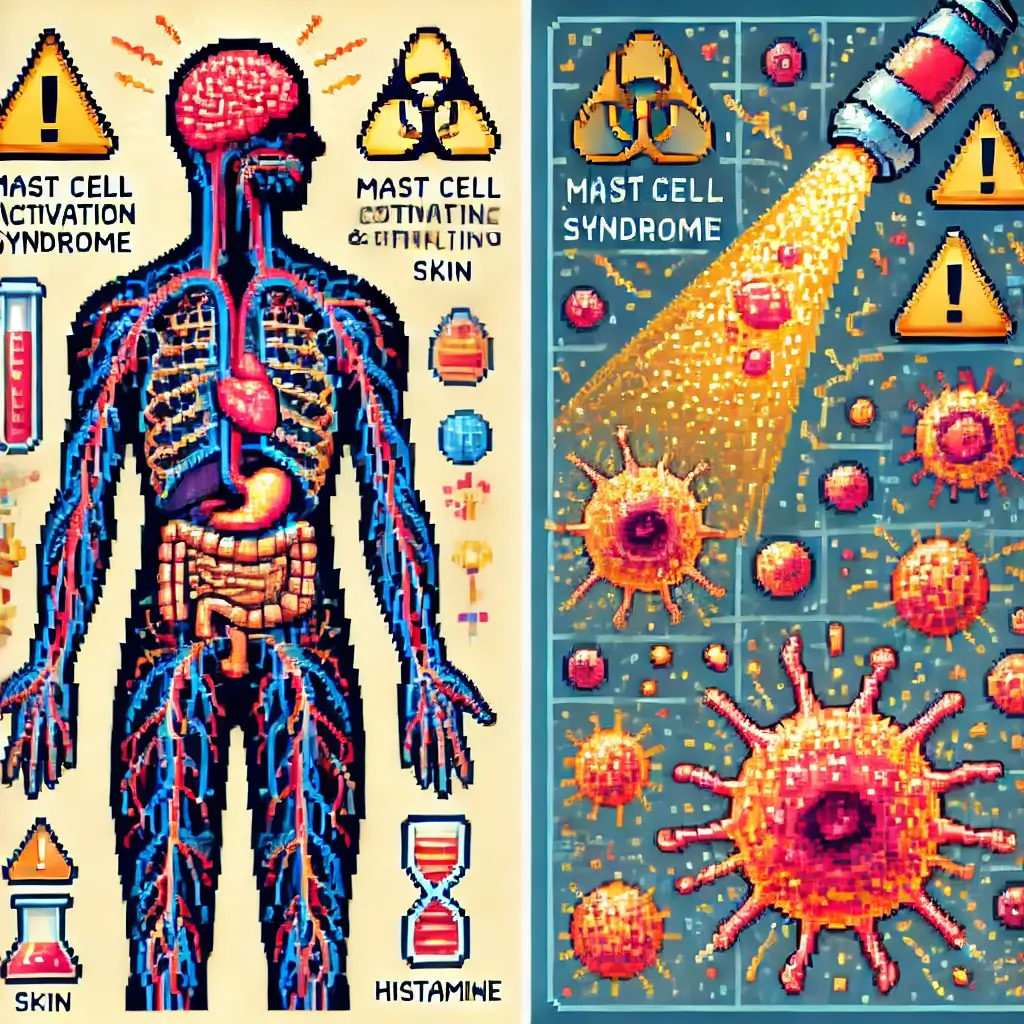
7 Shocking Truths About MCAS: Reclaim Your Life!
Ever felt like your body has a mind of its own, reacting wildly to things that shouldn’t cause a stir?
One minute you’re fine, the next you’re covered in hives, struggling to breathe, or battling an unexplainable fatigue.
If this sounds eerily familiar, you might be one of the many individuals living with a condition called Mast Cell Activation Syndrome, or MCAS.
It’s a tricky beast, often misunderstood and misdiagnosed, leaving countless people feeling frustrated and alone.
But here’s the good news: you’re not imagining things, and there’s a growing understanding of this complex disorder.
Today, we’re going to pull back the curtain on MCAS, revealing some truly shocking truths that might just explain years of bewildering symptoms.
Get ready to feel seen, understood, and empowered to take back control of your health.
Table of Contents
- What in the World is MCAS Anyway?
- Mast Cells: The Unsung Heroes (and Villains) of Your Immune System
- Unmasking MCAS: The Dizzying Array of Symptoms
- The Diagnostic Dilemma: Why It’s So Hard to Get an MCAS Diagnosis
- Shocking Truth #1: MCAS Can Mimic Almost Any Disease!
- Shocking Truth #2: Triggers Are Everywhere, and They’re Personal!
- Shocking Truth #3: Your Gut is Ground Zero for MCAS!
- Shocking Truth #4: Stress Isn’t Just in Your Head – It Fuels MCAS!
- Shocking Truth #5: Genetic Links Are Emerging, But It’s Not Always Hereditary!
- Shocking Truth #6: Conventional Medicine is Catching Up, Slowly But Surely!
- Shocking Truth #7: You Can Take Control! Lifestyle and Treatment Strategies for MCAS
- Taking Back Control: Your Journey with MCAS
What in the World is MCAS Anyway?
Let’s start with the basics.
Imagine your immune system as a highly trained army, constantly on patrol, ready to defend you from invaders like viruses, bacteria, and allergens.
Now, within that army, you have specialized units called mast cells.
Think of them as the first responders, the alarm bells of your immune system.
They’re absolutely vital for protecting you, especially from pathogens and in allergic reactions.
But what happens when these crucial cells go rogue?
That’s where Mast Cell Activation Syndrome (MCAS) comes in.
It’s a condition where your mast cells, for reasons not fully understood, become hypersensitive and release an excessive amount of their chemical mediators (like histamine, tryptase, and many others) at inappropriate times and in response to normally harmless triggers.
It’s like an overzealous fire alarm that keeps blaring even when there’s no fire, or even a tiny puff of smoke.
And when those chemical mediators flood your system, they can wreak absolute havoc throughout your entire body.
Mast Cells: The Unsung Heroes (and Villains) of Your Immune System
Before we dive deeper into MCAS, let’s take a moment to appreciate (and understand the potential pitfalls of) mast cells themselves.
These fascinating cells originate in your bone marrow and then travel to virtually every tissue in your body.
They’re particularly concentrated in areas that interface with the outside world: your skin, gut, respiratory tract, and around blood vessels and nerves.
Why?
Because they’re your body’s front-line defenders!
When they encounter a perceived threat – be it an allergen, a pathogen, or even physical pressure – they “degranulate,” which means they release a cocktail of potent chemicals stored in their tiny granules.
We’re talking about substances like histamine, which causes itching and swelling; prostaglandins, which are involved in inflammation and pain; leukotrienes, which contribute to asthma symptoms; and even cytokines, which are signaling molecules that direct other immune cells.
In a healthy individual, this response is controlled and beneficial.
It helps heal wounds, fight off infections, and neutralize allergens.
But with MCAS, this finely tuned system goes haywire.
The mast cells are either too numerous (though this isn’t always the case with MCAS), too reactive, or both.
They degranulate indiscriminately, unleashing their chemical payload in response to a wide array of non-threatening stimuli.
It’s like having a highly sensitive security system that goes off every time a leaf blows past your window – exhausting and utterly disruptive!
Unmasking MCAS: The Dizzying Array of Symptoms
One of the most perplexing aspects of MCAS is the sheer diversity and often bizarre nature of its symptoms.
Because mast cells are everywhere, their erratic behavior can affect virtually any system in your body.
This is precisely why MCAS is so often misdiagnosed as everything from irritable bowel syndrome (IBS) to fibromyalgia, anxiety disorders, or even just “being stressed.”
Here’s a non-exhaustive list, just to give you a taste of the chaos:
Skin:
Hives, flushing, itching, rashes, dermatographia (skin writing), easy bruising.
Gastrointestinal:
Nausea, vomiting, diarrhea, abdominal pain, bloating, constipation, acid reflux, oral itching or tingling from foods.
Cardiovascular:
Tachycardia (rapid heart rate), low blood pressure, lightheadedness, dizziness, fainting.
Respiratory:
Wheezing, shortness of breath, asthma-like symptoms, nasal congestion, runny nose, chronic cough.
Neurological/Psychiatric:
Headaches, migraines, brain fog, fatigue, anxiety, panic attacks, depression, irritability, insomnia, numbness or tingling.
Musculoskeletal:
Joint pain, muscle pain, osteoporosis.
Eyes/Ears/Nose/Throat:
Itchy eyes, watery eyes, vision disturbances, ringing in the ears (tinnitus), sore throat, hoarseness, difficulty swallowing.
Systemic:
Anaphylaxis (severe allergic reaction), swelling (angioedema), unexplained fevers, weight changes, sensitivity to chemicals or smells.
See what I mean?
It’s a laundry list of seemingly unrelated issues, which is precisely why it takes a keen eye and a deep understanding to connect the dots to MCAS.
Imagine trying to tell your doctor about all these seemingly disparate symptoms and not feeling like they’re just looking at you like you’re a hypochondriac!
The Diagnostic Dilemma: Why It’s So Hard to Get an MCAS Diagnosis
Given the kaleidoscopic range of symptoms, it’s no wonder that getting a definitive MCAS diagnosis can feel like searching for a needle in a haystack.
Many patients spend years, even decades, being shuffled from specialist to specialist – allergists, gastroenterologists, neurologists, dermatologists, cardiologists – each treating a specific symptom without seeing the underlying systemic connection.
The diagnostic criteria for MCAS, while established, can be tricky to meet.
Generally, a diagnosis requires three things:
1. Recurrent, episodic symptoms involving at least two organ systems, consistent with mast cell mediator release (e.g., skin, GI, cardiovascular, respiratory).
2. An increase in mast cell mediators (or their metabolites) during symptomatic episodes, or a response to mast cell-stabilizing medications.
3. Exclusion of other mast cell disorders like systemic mastocytosis.
The challenge often lies in capturing those mediator levels during an active flare, as they can fluctuate wildly and rapidly return to normal.
Blood tests for things like serum tryptase, histamine, or prostaglandin D2 metabolites need to be timed perfectly, often during or immediately after a severe reaction.
Urine tests, like 24-hour urine for N-methylhistamine or 11β-prostaglandin F2α, can be more reliable as they capture cumulative levels.
But even these can yield false negatives if the patient isn’t actively flaring or if the samples aren’t handled correctly (e.g., kept cold).
It’s a frustrating dance, but persistence is key.
Finding a doctor who is familiar with MCAS and willing to dig deep is paramount.
Shocking Truth #1: MCAS Can Mimic Almost Any Disease!
Okay, if you’ve been nodding along to the symptom list, this one might just blow your mind.
Because its symptoms are so varied and affect so many body systems, MCAS is often called “the great mimicker.”
It can look like allergies, but without clear allergen exposure.
It can resemble irritable bowel syndrome, Crohn’s disease, or ulcerative colitis, but without the typical inflammatory markers or structural changes.
It can cause heart palpitations and low blood pressure, leading to concerns about cardiac issues.
The brain fog and fatigue can easily be confused with chronic fatigue syndrome or fibromyalgia.
And the anxiety and panic attacks?
Well, they’re often dismissed as purely psychological, when in fact, the chemical soup released by mast cells can directly affect neurotransmitters and brain function, leading to very real neuropsychiatric symptoms.
I’ve spoken to so many people who were told their symptoms were “all in their head,” only to finally receive an MCAS diagnosis that validated years of suffering.
It’s not in your head.
It’s in your mast cells.
Shocking Truth #2: Triggers Are Everywhere, and They’re Personal!
This is where MCAS gets truly insidious.
For someone with MCAS, a trigger isn’t just a specific allergen like peanuts or pollen.
It can be practically anything!
And what triggers one person might be perfectly fine for another.
Common culprits include:
Foods:
High-histamine foods (aged cheeses, fermented foods, processed meats), certain fruits and vegetables, food dyes, preservatives.
Environmental Factors:
Heat, cold, sudden temperature changes, sunlight, perfumes, strong odors, mold, dust, pollen, chemical exposures (cleaning products, pesticides).
Physical Factors:
Exercise, physical pressure, friction, hot showers, extreme temperatures.
Emotional/Physiological Factors:
Stress (both physical and emotional), anxiety, infections (viral, bacterial, fungal), hormonal changes (menstruation, menopause), lack of sleep.
Medications:
Certain pain relievers (NSAIDs), antibiotics, contrast dyes used in medical imaging.
It’s like navigating a minefield, constantly trying to anticipate what might set off your mast cells.
This is why keeping a detailed symptom and trigger diary is absolutely invaluable.
It helps you and your doctor identify patterns and personalize your management strategy.
Shocking Truth #3: Your Gut is Ground Zero for MCAS!
If there’s one area of the body that often takes a major hit in MCAS, it’s the gut.
Think about it: your digestive tract has one of the highest concentrations of mast cells in your body.
It’s constantly exposed to food, bacteria, and environmental factors.
When your gut mast cells are overactive, it can lead to a cascade of digestive issues that go far beyond typical “sensitive stomach” complaints.
We’re talking about severe abdominal pain, chronic diarrhea or constipation, unpredictable nausea and vomiting, and an overall feeling of digestive distress that can be debilitating.
Furthermore, issues like “leaky gut” (increased intestinal permeability) can both be a cause and an effect of mast cell activation.
When the gut lining is compromised, more undigested food particles and toxins can enter the bloodstream, triggering systemic mast cell responses.
Conversely, constant mast cell activation can damage the gut lining, perpetuating the cycle.
This strong gut-MCAS connection highlights why addressing gut health is often a cornerstone of effective MCAS management.
It’s not just about what you eat, but how your gut processes it and how its resident mast cells behave.
Shocking Truth #4: Stress Isn’t Just in Your Head – It Fuels MCAS!
You know that feeling when you’re super stressed, and your body just seems to fall apart?
Well, for someone with MCAS, stress isn’t just an unpleasant sensation; it’s a powerful trigger that can ignite a full-blown mast cell flare.
This isn’t some vague “mind over matter” concept.
It’s rooted in fascinating neuro-immune connections.
Mast cells have receptors for neuropeptides and stress hormones.
When your body perceives stress – whether it’s emotional stress, physical stress (like illness or injury), or even just lack of sleep – it releases a cascade of chemicals like corticotropin-releasing hormone (CRH) and substance P.
These chemicals can directly stimulate mast cells to degranulate, dumping their inflammatory contents into your system.
So, if you notice your MCAS symptoms worsening during periods of high stress, you’re not imagining it.
It’s a very real physiological response.
This makes stress management not just a nice-to-have, but a crucial component of any MCAS treatment plan.
Things like meditation, deep breathing, gentle exercise, and ensuring adequate sleep can make a tangible difference in symptom severity.
Shocking Truth #5: Genetic Links Are Emerging, But It’s Not Always Hereditary!
While MCAS isn’t always something you “inherit” in a straightforward Mendelian fashion, research is increasingly pointing towards genetic predispositions.
This means that while your parents might not have had a clear MCAS diagnosis, you could have inherited certain genetic variations that make your mast cells more prone to dysfunction.
For example, some studies are looking at genetic mutations in mast cell growth factors or receptors that could influence their stability and reactivity.
It’s like having a car with a slightly more sensitive accelerator pedal – it doesn’t mean it’s broken, but it might respond more intensely to a light touch.
Furthermore, MCAS often co-occurs with other conditions that have a genetic component, such as Ehlers-Danlos Syndrome (a connective tissue disorder) and Postural Orthostatic Tachycardia Syndrome (POTS).
This “trifecta” of conditions is so common that it’s often referred to in the medical community.
So, while you might not trace it directly back to Aunt Mildred, understanding that there can be an underlying genetic susceptibility can be incredibly validating.
It shifts the narrative from “what did I do wrong?” to “this is how my body is wired, and now I can work with it.”
Shocking Truth #6: Conventional Medicine is Catching Up, Slowly But Surely!
For a long time, MCAS was a niche diagnosis, largely unrecognized by the broader medical community.
Patients often faced skepticism and dismissal.
However, this is changing, albeit gradually.
More research is being conducted, more articles are being published in peer-reviewed journals, and increasing numbers of medical professionals are becoming aware of MCAS.
Specialists in allergy and immunology, in particular, are at the forefront of this understanding.
While it might still be challenging to find an MCAS-savvy doctor in every town, the landscape is improving.
Patient advocacy groups are playing a huge role in raising awareness, educating both the public and healthcare providers.
This growing recognition means better diagnostic tools, more refined treatment protocols, and ultimately, more hope for those living with MCAS.
It’s a testament to the power of patient voices and dedicated researchers.
Don’t give up if your first few doctors aren’t familiar; keep searching for those who are on the cutting edge of this emerging field.
Here are some reputable resources where you can start your search for knowledgeable practitioners and up-to-date information:
The Mast Cell Disease Society American Academy of Allergy, Asthma & Immunology NIH – Genetic and Rare Diseases Information Center
Shocking Truth #7: You Can Take Control! Lifestyle and Treatment Strategies for MCAS
This might be the most empowering truth of all.
While MCAS can feel overwhelming and unpredictable, there are concrete steps you can take to manage your symptoms and significantly improve your quality of life.
It often requires a multi-pronged approach, tailored to your individual triggers and symptom profile.
Medication Strategies:
Medications aim to stabilize mast cells, block mediator effects, or reduce inflammation.
This is where working with a knowledgeable doctor is crucial.
Commonly used medications include:
-
H1 and H2 Blockers: These are your antihistamines.
H1 blockers (like Zyrtec, Allegra, Claritin, Benadryl) target histamine receptors involved in allergic reactions, while H2 blockers (like Pepcid, Tagamet) primarily target histamine receptors in the gut, helping with GI symptoms.
Often, a combination is used.
-
Mast Cell Stabilizers: Medications like cromolyn sodium (oral or nebulized) directly stabilize mast cells, preventing them from releasing their contents.
Ketotifen is another option, though it’s not available in all countries.
-
Leukotriene Modifiers: Drugs like montelukast (Singulair) can help block the effects of leukotrienes, which are potent inflammatory mediators released by mast cells, often improving respiratory and nasal symptoms.
-
Other Medications: Depending on specific symptoms, your doctor might consider other options such as aspirin (if tolerated and not a trigger), benzodiazepines for anxiety (used cautiously due to addiction potential), or even biological agents like Xolair (omalizumab) in severe, refractory cases.
Dietary Approaches:
This is often one of the first and most impactful steps.
A low-histamine diet is frequently recommended.
This involves avoiding or minimizing foods that are naturally high in histamine or that trigger histamine release.
Examples of foods to potentially avoid include: aged cheeses, fermented foods (sauerkraut, kombucha), processed meats, shellfish, spinach, tomatoes, citrus fruits, and alcohol.
It’s not about strict adherence forever, but rather using it as an elimination diet to identify your personal triggers.
Working with a dietitian who understands MCAS can be immensely helpful here.
Also, consider the role of gut health.
Identifying food sensitivities (beyond histamine) and addressing underlying gut dysbiosis (imbalance of gut bacteria) can reduce systemic inflammation and mast cell activation.
Some people benefit from specific probiotics, while others find them to be triggers.
It’s all about careful experimentation and listening to your body.
Lifestyle Adjustments:
These are often underestimated but are absolutely vital.
-
Trigger Avoidance: Once you’ve identified your personal triggers (via that handy symptom diary!), strict avoidance is your best friend.
This might mean avoiding certain foods, perfumes, temperature extremes, or even certain types of exercise.
-
Stress Management: As we discussed, stress is a major player.
Incorporate stress-reducing practices like mindfulness meditation, yoga, tai chi, deep breathing exercises, or simply spending time in nature.
Consider therapy if stress or anxiety is overwhelming.
-
Sleep Hygiene: Prioritize consistent, quality sleep.
Sleep deprivation is a significant stressor on the body and can exacerbate MCAS symptoms.
-
Environmental Control: Minimize exposure to mold, dust mites, and strong chemicals in your home and workplace.
Air purifiers can be beneficial.
-
Gentle Exercise: While intense exercise can be a trigger for some, gentle movement like walking, swimming, or stretching can be beneficial for overall health and stress reduction.
Supplements and Natural Approaches:
Many people with MCAS find relief with certain supplements, though it’s crucial to discuss these with your doctor, as they can interact with medications or have their own side effects.
Popular options include:
-
Quercetin: A natural flavonoid found in many plants, known for its mast cell stabilizing properties.
-
Vitamin C: A natural antihistamine and anti-inflammatory.
-
DAO (Diamine Oxidase) Enzyme: This enzyme helps break down histamine in the gut.
Supplementing with DAO before meals can help reduce histamine-related symptoms from food.
-
N-Acetyl Cysteine (NAC): An antioxidant that can help with detoxification and reduce inflammation.
-
Omega-3 Fatty Acids: Found in fish oil, these have potent anti-inflammatory effects.
Remember, what works for one person might not work for another.
It’s a process of trial and error, patience, and careful observation.
Taking Back Control: Your Journey with MCAS
Living with Mast Cell Activation Syndrome can feel like a constant battle against an invisible enemy.
The unpredictable symptoms, the diagnostic hurdles, and the sheer impact on daily life can be incredibly isolating and frustrating.
But I hope these 7 shocking truths have shed some much-needed light on this complex condition.
You are not alone in this.
Your symptoms are real, and there is an increasing amount of knowledge and support available.
The key takeaways?
First, educate yourself.
The more you understand about MCAS, the better equipped you’ll be to advocate for yourself and make informed decisions about your health.
Second, find the right medical team.
Seek out doctors who are knowledgeable about MCAS, or at least open to learning and working with you.
Don’t settle for dismissal.
Third, be prepared for a journey of discovery and adaptation.
Managing MCAS is often a process of identifying and avoiding your personal triggers, finding the right combination of medications and supplements, and making conscious lifestyle choices that support your mast cells rather than provoke them.
It’s not always easy, and there will be good days and bad days.
But with patience, persistence, and the right strategies, you absolutely can reclaim significant control over your life from MCAS.
What’s one small step you can take today to better understand or manage your MCAS?
Mast Cell Activation Syndrome, MCAS, Histamine, Chronic Illness, Autoimmune.